
Residential Energy Storage Systems
HOME BATTERY / SOLAR / BACKUP PLANNING
Residential Energy Storage Systems for Solar and Backup Power
Compare SINELINK home batteries, hybrid inverters and integrated residential ESS options before selecting an exact system model.
The correct architecture depends on household loads, solar capacity, backup circuits, grid connection, phase type, installation location and operating priorities.


A residential energy storage system stores electricity for later household use. A complete configuration may include a home battery, battery management system, hybrid inverter, controls and protection equipment. Battery capacity, inverter output, phase arrangement and backup design must be reviewed together.
Choose the Right Residential Energy Storage Product
Start with system architecture and application, then verify the exact model specifications and compatible combinations.

Hybrid Solar Inverters
Coordinate solar generation, battery charging, household loads and grid interaction when the battery and inverter are selected separately.
Explore hybrid solar inverters →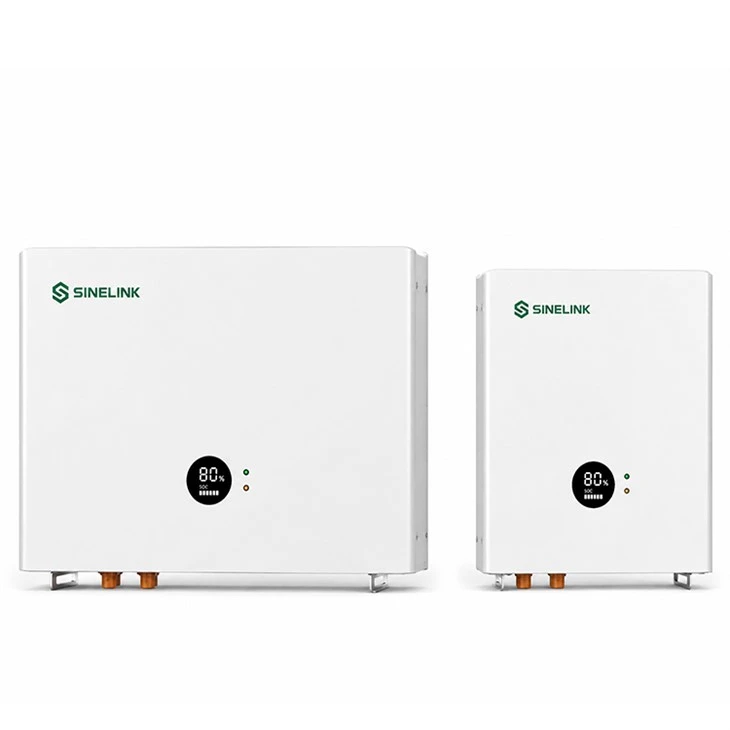
Standalone Home Batteries
Wall-mounted, rack-mounted and stackable battery formats for installers matching a battery to a confirmed compatible inverter.
Explore standalone battery products →Integrated Home Energy Storage Systems
A coordinated platform combining major system functions to simplify product matching and installation planning.
Explore integrated home ESS →Battery Packs and Portable Systems
Options for mobility, temporary power or selected appliance support. Evaluate them separately from permanently installed whole-home systems.
Explore battery packs and portable systems →


Residential ESS Selection Checklist
Battery capacity in kilowatt-hours and inverter power in kilowatts answer different questions. Capacity affects potential operating time; inverter output limits how much power can be delivered at once. Size the system from the actual load profile, not the monthly electricity bill alone.
| Selection factor | Questions to answer |
|---|---|
| Energy | Which loads must run, for how many hours, and what usable capacity is required? |
| Power | What are the continuous and starting-power requirements? |
| Electrical system | Single-phase, split-phase or three-phase; what AC voltage and frequency? |
| Solar and grid | Existing or new PV; grid-tied, backup-capable or project-defined operating mode? |
| Compatibility | Battery voltage, inverter protocol, approved combinations and expansion limits? |
| Site | Indoor or outdoor location, temperature, space, access and local requirements? |
Common Residential Energy Storage Applications
Solar self-consumption: use stored daytime solar energy after sunset.
Time-of-use management: shift grid energy use according to the applicable tariff.
Selected-load backup: maintain defined essential circuits where the system design permits backup operation.
Scalable household systems: plan capacity and power expansion for future load growth.
Actual operating modes, backup performance and economic results depend on system design, local rules, electricity tariffs and installation conditions. Review the broader residential solar and energy storage solution for system-level planning.
Information Required for a Home ESS Recommendation
- Country, AC voltage, frequency and phase type
- Daily consumption and interval load data
- Essential loads and required backup duration
- Solar-array capacity and existing inverter
- Installation location and available space
- Certification, communication, expansion and delivery needs
Include the load profile, single-line diagram or existing equipment datasheets. Review SINELINK’s capabilities and factory overview.
Residential Energy Storage FAQ
How do I size a residential battery system?
Start with supported loads, power demand and operating time, then account for usable capacity, conversion losses, operating limits and expansion.
What is the difference between kW and kWh?
Kilowatts describe power available at one time. Kilowatt-hours describe stored energy.
Standalone battery or all-in-one ESS?
Choose standalone when matching to a confirmed compatible inverter; choose integrated when coordinated components and simpler planning are the priority.
Can a home battery provide outage backup?
Only when the inverter, transfer arrangement, battery and electrical design support backup operation, with defined circuits and power limits.
Request a home energy storage configuration
Send the country, phase, load data, backup goal, solar details, installation location, quantity and schedule.
As one of the most professional residential energy storage systems manufacturers and suppliers in China, we're featured by quality products and low price. Please rest assured to wholesale customized residential energy storage systems made in China here from our factory. For quotation, contact us now.