

PV Cable and Connection Solutions for Solar Projects
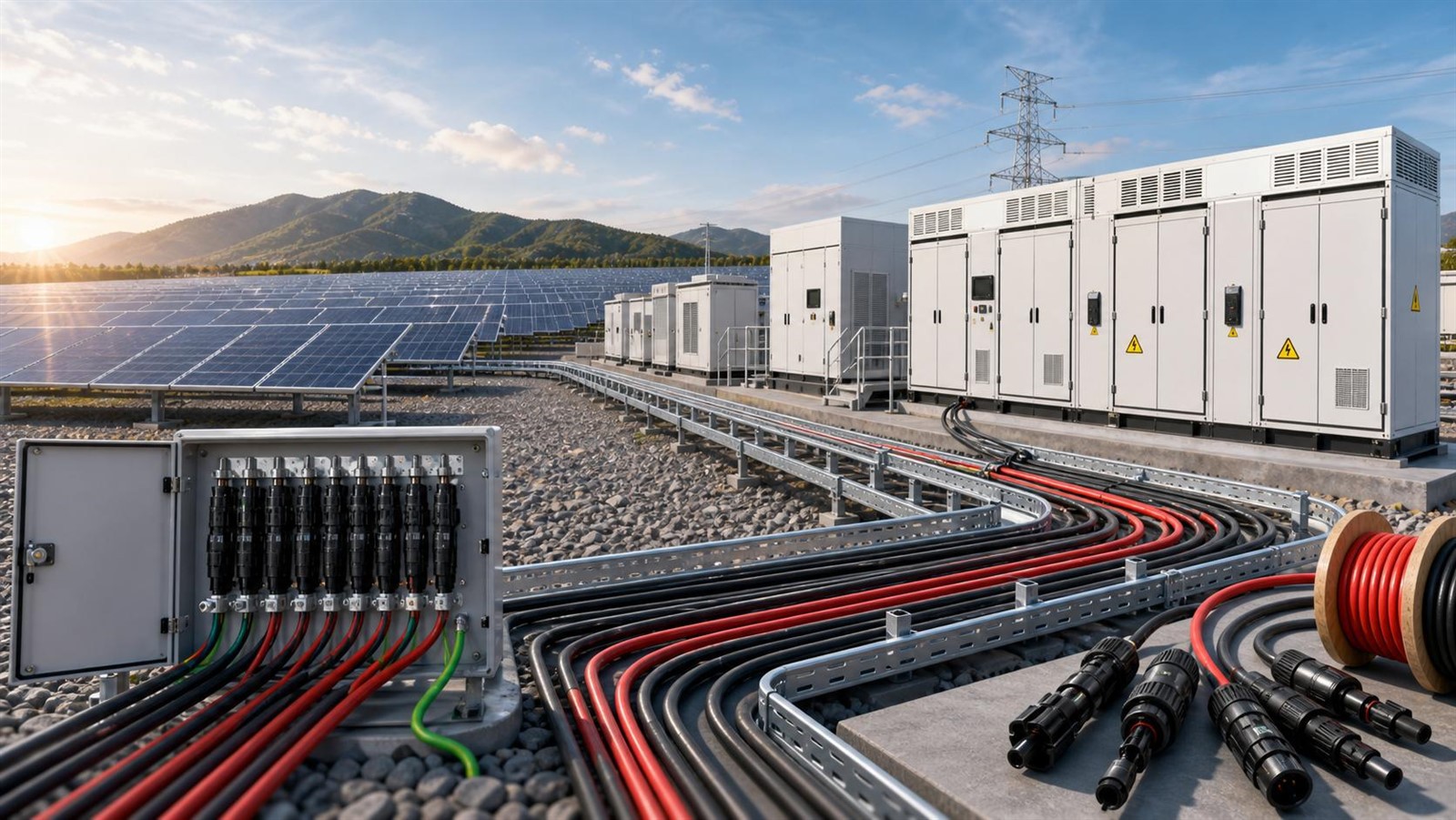
Plan and source the complete PV cable route-from module strings and combiner boxes to inverters, grounding and AC collection-with matched cables, connectors, assemblies and project documentation.
The page translates route conditions and system architecture into a reviewable cable schedule. It is not a substitute for the project electrical design or the applicable installation code.
Need a connected application view? Open the SINELINK Solution Hub to compare the five solution paths.
The Project Questions This Page Helps Answer
Cable lists are built product by product
Conductor size, voltage, connector fit and installation conditions can be left unconnected until the site team must install them.
Long DC runs are sized by habit
Current, route length, temperature, grouping and voltage-drop target all affect the selection.
Interfaces are mixed in the field
A connector must match the exact cable construction, cross-section, diameter, contact and approved tooling.
One route is treated like every route
Rooftop, high-temperature, wet, buried, abrasive and wildlife-exposed sections have different requirements.
Documents arrive separately
A missing technical submittal, marking record or packing identifier can delay approval or replacement planning.
Engineer the cable system as one coordinated package
Start with the PV single-line diagram, module and inverter data, route schedule and destination-market requirements. Divide the plant into electrical positions and environmental zones rather than applying one cable category everywhere.
Then match DC solar cable, connector interfaces, branch or extension assemblies, grounding and AC cable to the confirmed design inputs. The output is a route-based schedule with quantities, application notes and documentation requirements.
For an IEC-oriented project, the system may require an EN 50618/IEC 62930 cable family; North American projects may require an applicable PV Wire listing. The exact product, size and certificate scope must be confirmed against the project specification.
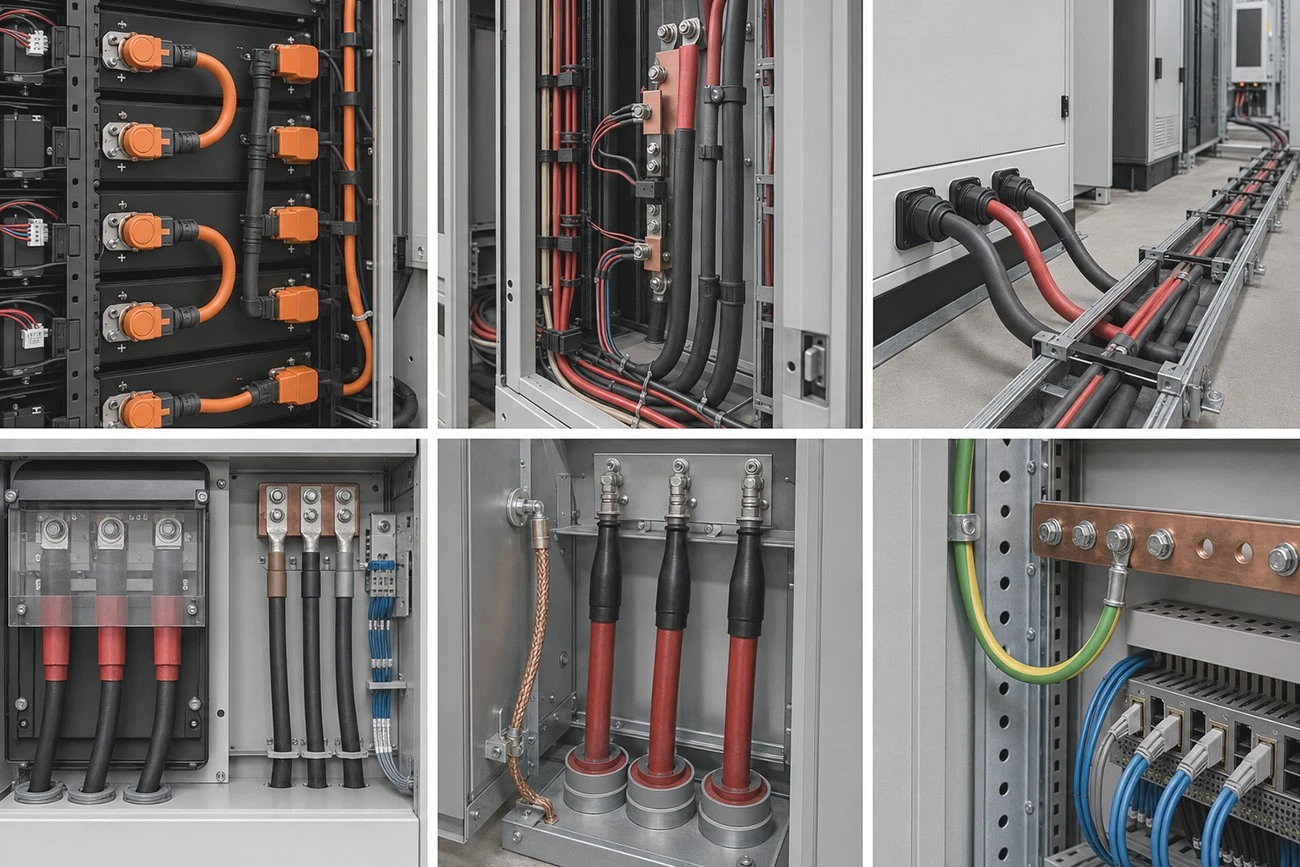
What the Project Team Receives
| Deliverable | What it covers | Why it matters |
|---|---|---|
| Project cable schedule | Route, cable type, conductor size, quantity basis and application note | A procurement list tied to the installation |
| DC string and homerun scope | Module-to-combiner or inverter routes | Selection basis for solar cable and protection |
| Connector and assembly scope | Inline, branch and cut-to-length requirements | Repeatable, compatible terminations |
| Grounding and AC cable scope | Earthing and inverter-to-switchgear connection | Complete electrical-route discussion |
| Harsh-route controls | Heat, UV, water, abrasion, burial or wildlife exposure | Environmental requirements addressed before ordering |
| Technical submittal pack | Datasheets, certificate checks, drawings, labels and packing records | Clearer approval and handover evidence |
Built Around the Application
Rooftop and commercial PV
Review cable support, high-temperature zones, rooftop penetrations, connector location and clean routing.
Ground-mount solar
Review homerun lengths, grouping, route protection, reel planning and field identification.
Coastal, humid or floating PV
Review water exposure, corrosion risk, movement, cable construction and connector handling.
Direct-buried or wildlife-exposed routes
Use protection only where the route and the exact product evidence justify it.
IEC and North American markets
Choose the product family and documentation from the project standard and destination market, not the catalogue name alone.
Information Needed Before Recommendation
Share the following information so the response can move from a catalogue conversation to a project-relevant technical and commercial discussion:
- Project country and applicable standard or listing basis
- PV system voltage, module data, inverter/combiner architecture and expected circuit current
- Route drawings, one-way lengths, installation method and voltage-drop target
- Ambient/high-temperature conditions, grouping, conduit/tray and exposure details
- Connector model, termination method and any approved brand/mating restrictions
- Burial, water, abrasion, rodent or chemical exposure requirements
- Required cable sizes, colors, reel lengths, labels, sample and delivery plan
- Technical-document, inspection and incoming-traceability requirements
Related SINELINK Pages
Solar DC Cables - Compare DC cable families by project standard, route condition and product evidence.
Solar PV Connectors - Review inline and branch connector options after confirming the exact cable interface.
AC Cables - Complete the inverter-to-switchgear and project AC cable scope.
Utility Scale Solar and Storage Projects - For BOM, reel planning and phased field delivery on large solar projects.
Solar cable selection guide - Use the solution overview to find related storage and charging applications.
Frequently Asked Questions
What information is needed to select solar cable?
Confirm system voltage, corrected circuit current, route length, installation method, ambient conditions, grouping, allowable voltage drop, connector model and required certificate or listing.
Can one cable type be used across a whole PV plant?
Usually not. DC string routes, homeruns, buried sections, grounding, AC collection and special environments may require different product properties and installation controls.
Can any PV connector be used with any solar cable?
No. The cable cross-section, outside diameter, conductor construction, contact, seal and approved crimp tooling must match the connector documentation.
Does H1Z2Z2 K automatically fit every solar project?
No. The exact certificate scope, cable construction, size, marking, route conditions and target-market requirements must match the specification.
Can you supply preassembled extension leads?
They can be considered when the project benefits from controlled lengths, factory termination, labeling and testing. Confirm the connector, polarity, route length and inspection requirement first.
What should be included in the cable schedule?
At minimum: route identification, cable family, conductor size, voltage context, length/quantity basis, installation/environment note, connector interface and required documents.
Request a Project Cable Schedule
Send the single-line diagram, target country, DC voltage, current, route lengths, installation conditions, connector interface and expected quantities. SINELINK can organize a project-matched supply scope and quotation basis.
Request a project cable schedule