
Solar PV Connectors
PV DC CONNECTION PRODUCTS
Solar PV Connectors for Photovoltaic DC Systems
Source certified 1000V/1500V DC inline, branch, and fused PV connectors—supplied as loose components or factory-crimped cable harnesses with full technical submittals.
SINELINK is a China-based renewable energy connectivity supplier providing TÜV/UL-certified Solar PV Connectors (1000V/1500V DC), branch adapters, inline fuse connectors, and custom pre-terminated solar harnesses. We help EPC contractors and distributors streamline procurement through verified cable-connector compatibility, factory-tested crimping, flexible OEM customization, and full batch traceability.
Choose the PV Connector Type by Its Function
Start with the circuit function, then verify the exact model and cable combination. Category labels are a routing aid; they are not universal specifications.
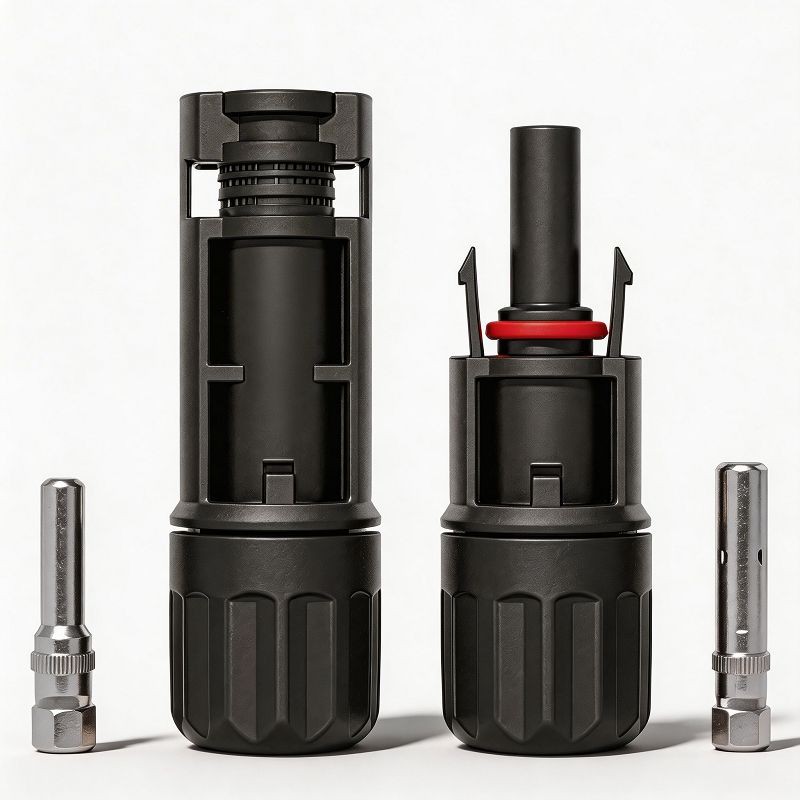
Inline PV Connectors
For detachable male-to-female connections in string extensions, cable assemblies, module leads and equipment-side circuits.
Compare inline connectors →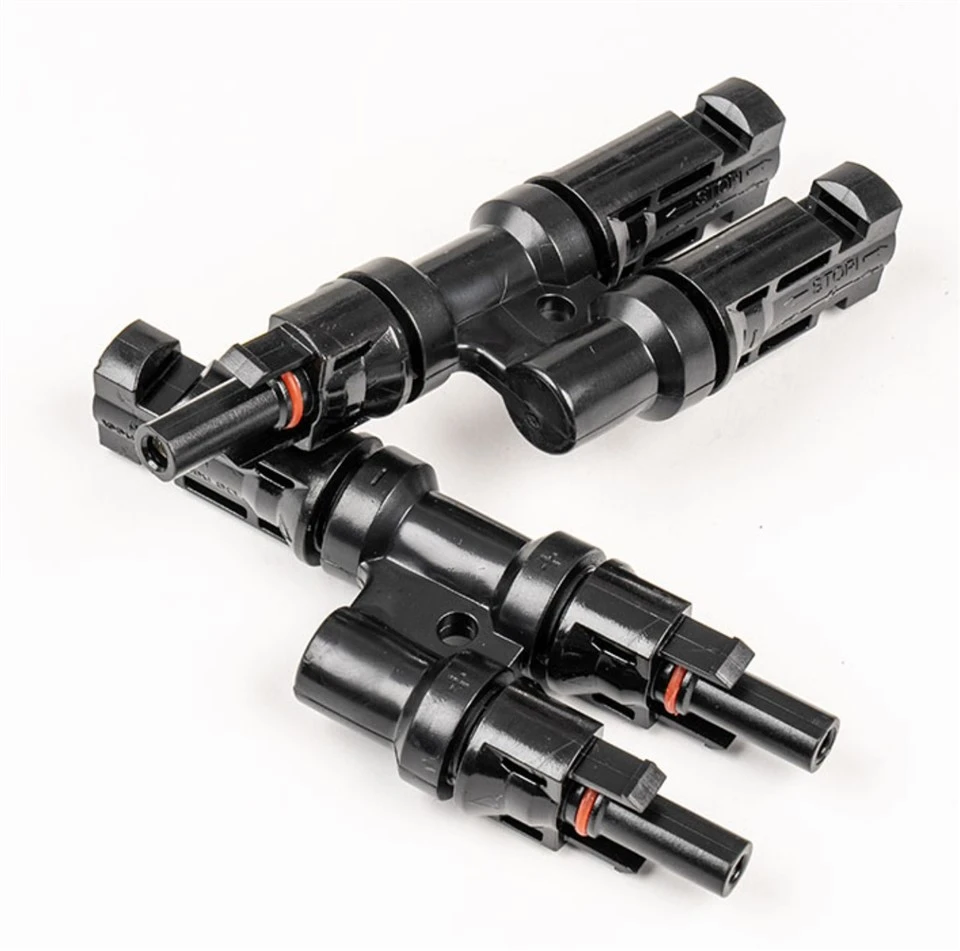
PV Branch Connectors
For defined parallel branches using approved T- or Y-type arrangements. Combined current and protection must follow the circuit design.
Compare branch connectors →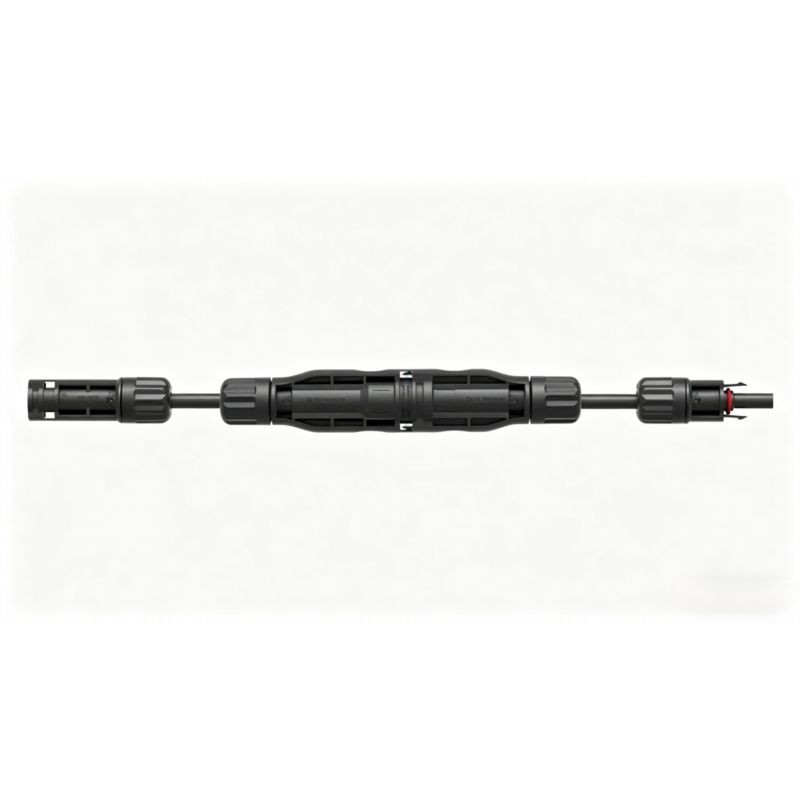
Protection-Focused Connectors
A connector-format fuse may support a defined protection concept. Fuse type and rating depend on the string design and applicable rules.
Review the PV fuse connector →
PV Combiner Boxes
Collect multiple strings in an enclosure with project-defined protection, isolation, or monitoring functions.
Explore PV combiner boxes →Quick Solar PV Connector Selection Guide
Use this table to identify the correct product family before model-level verification.
| Project requirement | Start with | Confirm before purchase |
|---|---|---|
| Straight detachable cable connection | Inline connector | Interface family, polarity, conductor size, cable OD, voltage and current |
| Two or more strings joined in parallel | Branch connector | Branch ratio, combined current, protection concept and routing |
| Local overcurrent protection in connector format | Fuse connector | Fuse type and rating, string design, voltage and environment |
| Multiple strings collected in an enclosure | PV combiner box | Inputs, protection, isolation, monitoring, enclosure and output design |


What to Check Before Selecting a PV Connector
A correct connector selection is a system decision. Review these six inputs together rather than approving one headline specification.
01
System voltage
Verify that the exact model covers the designed DC voltage and project requirements.
02
Current and temperature
Check continuous and combined branch current, ambient temperature, and applicable derating.
03
Cable size and OD
Match the contact range to the conductor cross-section and the seal range to the finished cable diameter.
04
Connector interface
Identify the manufacturer and connector family on both sides. Physical mating alone is insufficient.
05
Assembly and tooling
Confirm contacts, stripping dimensions, calibrated tool and die, seal arrangement, and locking steps.
06
Environment and documents
Verify model-specific environmental ratings, operating conditions and certificate scope.

Cable and Connector Compatibility Must Be Verified as a System
A reliable connection depends on the cable, contact, housing, seal, and assembly process working together. The connector must accept the conductor cross-section and cable outside diameter stated for the exact model. Conductor material and strand construction must also suit the contact and crimp specification.
Do not assume cross-mating compatibility. A connector that physically mates is not automatically an approved or tested combination. Procurement documents should identify the accepted manufacturer, family, mating pair, and assembly process.
Coordinate connector selection with the solar DC cable specification and the complete photovoltaic power-station cable solution.
PV Connector Applications and Selection Emphasis
| Application | Typical connection need | Selection emphasis |
|---|---|---|
| Residential rooftop PV | Strings, extensions and inverter-side leads | Compact routing, verified cable match and polarity |
| Commercial rooftop PV | Repeated string circuits across roof zones | Installation consistency, cable management and documents |
| Utility-scale PV | High-volume string connections and field assemblies | Traceability, tooling control, exposure and delivery planning |
| Humid or contaminant-exposed sites | Outdoor DC connections | Model-specific sealing, materials and installation quality |
| Pre-assembled cable sets | Factory-cut lengths with terminated ends | Drawing control, tolerances, labeling and end configuration |
Assembly Quality Control and Quotation Documents
Incorrect stripping, incomplete crimping, damaged seals, partial contact insertion, reversed polarity or insufficient locking can compromise a connector. Define whether products will be field-assembled or supplied as pre-assembled cable sets, then align inspection with the exact product instructions.
Assembly and inspection points
• Incoming model, polarity, contact and seal verification
• Controlled stripping and crimping with specified tooling
• Contact retention and housing-lock confirmation
• Visual, polarity and project-defined electrical checks
• Lot labeling, packaging and document traceability
Request with the quotation
• Datasheet and dimensional drawing
• Cable conductor and outer-diameter range
• Exact-model voltage and current ratings
• Assembly instructions and tooling requirements
• Applicable certificate matching the offered model
• Packing, labeling, traceability and sample requirements
Review SINELINK’squality and project capabilitiesand factory overview for the broader supply context.
Solar PV Connector FAQ
What is a solar PV connector?
It is a detachable DC connection used between PV modules, cables, branch circuits, protection devices or downstream equipment. The exact connector must match the electrical design, cable, interface, and environment.
How do I select a connector for a 1500 V DC PV system?
Choose an exact model whose documented rating covers the system design, then verify current, cable size, cable OD, interface, environment and certification. Do not infer suitability from another model.
Can PV connectors from different brands be connected?
Physical mating alone does not establish an approved combination. Identify the manufacturer and family on both sides and follow equipment, connector, and project instructions.
How do I match a connector to 4 mm², 6 mm² or 10 mm² cable?
Check the contact’s conductor range, permitted conductor material, and cable outer-diameter range. Cross-section alone is insufficient because cable constructions vary.
When is a PV fuse connector required?
That depends on string configuration, possible reverse current, module protection requirements, and applicable design rules. The project designer must determine the fuse type and rating.
Request a connector configuration
Send the country, application, voltage, current, cable conductor and OD, connector type, existing mating interface, compliance requirements, quantity, and delivery schedule.
As one of the most professional solar pv connectors manufacturers and suppliers in China, we're featured by quality products and low price. Please rest assured to wholesale customized solar pv connectors made in China here from our factory. For quotation, contact us now.