

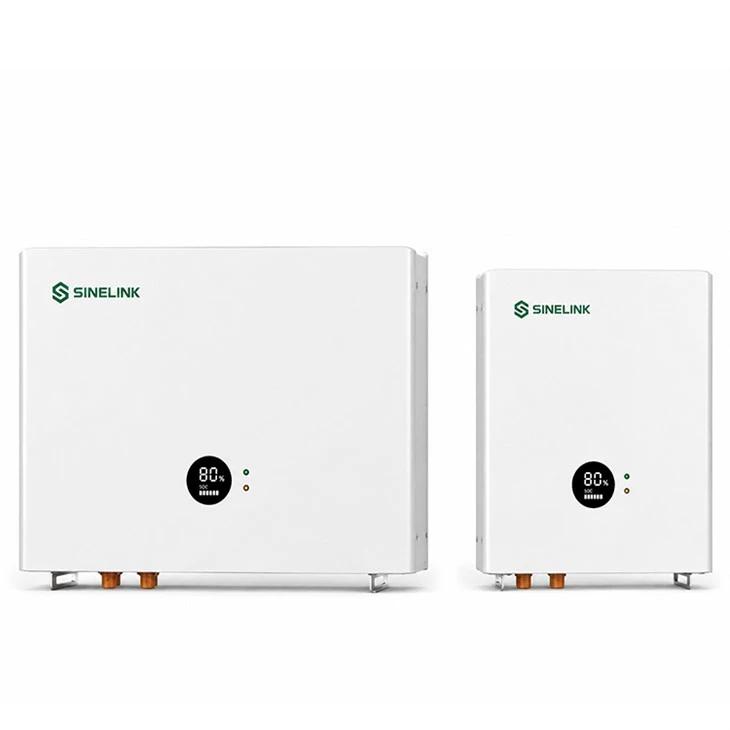
Product Overview
Low-voltage lithium battery platform with eight configurations covering 25.6V, 48V and 51.2V systems at 100Ah, 200Ah or 314Ah. The series combines an intelligent BMS, CAN/RS485 communication, natural-air cooling and modular parallel expansion for residential, backup and light commercial storage applications.
Select the exact voltage platform first. Batteries with different nominal voltages, capacities, firmware or state of health must not be mixed unless the approved system design expressly allows it.
Automated Energy Storage PACK Assembly Line
Our automated PACK production line integrates robotic handling, cell positioning, module assembly and process control to support efficient and consistent battery pack manufacturing. Automated operations help improve assembly accuracy, production traceability and overall quality consistency for energy storage applications..

Product Feature
-
Multiple Low-Voltage Platforms
Eight models cover 25.6V, 48V and 51.2V architectures, allowing closer matching to the selected inverter and DC system.
-
Intelligent BMS and Communication
CAN and RS485 interfaces support battery status exchange with compatible inverters and monitoring equipment.
-
Scalable Parallel Capacity
The standard platform supports up to 20 modules in parallel; special configurations up to 48 modules require project confirmation.
-
Optional Low-Temperature Heating
The standard charging temperature range is 0–55°C. An optional heating configuration supports cold-weather operation within the specified −20–55°C range.
Technical Specifications
Operating Parameters
Understanding Cycle Life and DOD
Cycle Life and Operating Conditions
Cycle life is rated at ≥6000 cycles. Actual service life depends on depth of discharge, charge/discharge rate, temperature, time at high state of charge, cell balance and operating limits.
Usable Energy and Depth of Discharge
Depth of discharge describes how much stored energy is removed. A wider SOC window provides more usable energy per cycle but can increase battery stress; the project should balance runtime, reserve and life objectives.
Temperature management matters
The recommended storage range is 10–35°C. Avoid prolonged high temperature and do not charge below the approved limit unless the ordered heating configuration and control logic permit it.
Battery Aging and Charge/Discharge Testing

Capacity evaluation: Controlled charge and discharge cycles help evaluate battery capacity and operating stability under defined test conditions.
Electrical and thermal behavior: Monitoring voltage, current and temperature helps identify abnormal behavior and assess cell consistency under load.
BMS performance: Charge/discharge testing helps evaluate BMS monitoring and protective responses as part of battery performance assessment.
Selection Guidance
Confirm the inverter battery-voltage window and approved BMS protocol before selecting 25.6V, 48V or 51.2V.
At 0.5C, permissible current scales with capacity. Verify continuous inverter demand and cable/protection ratings.
Use matching modules and confirm busbar, fuse, communication, addressing and current-sharing arrangements.
Base the option on the lowest charging temperature, installation location and available auxiliary power.
Installation and Maintenance
- Install indoors in a dry, ventilated location consistent with IP20.
- Confirm polarity, torque, fuse and isolator ratings before energizing.
- Keep parallel modules at compatible voltage and state of charge before connection.
- Review BMS alarms, cell-voltage spread, temperature and communication status.
- Inspect terminals for looseness, corrosion or heat marks only after safe isolation.
Packing and Transport

Ship each battery in approved protective packaging with terminals insulated against short circuit. Confirm required lithium-battery test summaries, labels, documents, state-of-charge limits and carrier restrictions for the selected transport route. Keep packages upright and dry, protect them from impact, and quarantine any unit showing deformation, leakage, unusual odor or abnormal heat.
FAQ
Can 48V and 51.2V models be mixed?
Not by default. Their voltage windows and charging setpoints differ. Use only an approved matched configuration.
Does ≥6000 cycles mean identical life in every project?
No. Actual life varies with DOD, temperature, rate, operating limits and maintenance.
Is low-temperature heating included as standard?
No. Heating is optional. The standard charging temperature range is 0–55°C; cold-weather installations require the appropriate heating configuration and operating controls.
Can the battery communicate with any CAN or RS485 inverter?
Compatibility depends on the communication protocol, firmware and cable pinout as well as the physical interface. Share your inverter model with SINELINK for compatibility matching.
Can 48 modules always be paralleled?
No. Standard configurations support up to 20 modules in parallel. Expansion to 48 modules requires a dedicated system configuration and is not a standard feature of every order.
Match Voltage, Capacity and BMS Communication
Contact SINELINK with your inverter model, required energy, backup duration, charge/discharge power, site temperature and expansion plan to select a suitable battery configuration.
Send Inquiry NowSpecifications are subject to change without prior notice. Product configuration and supply scope are specified in your quotation.


