

Product Overview
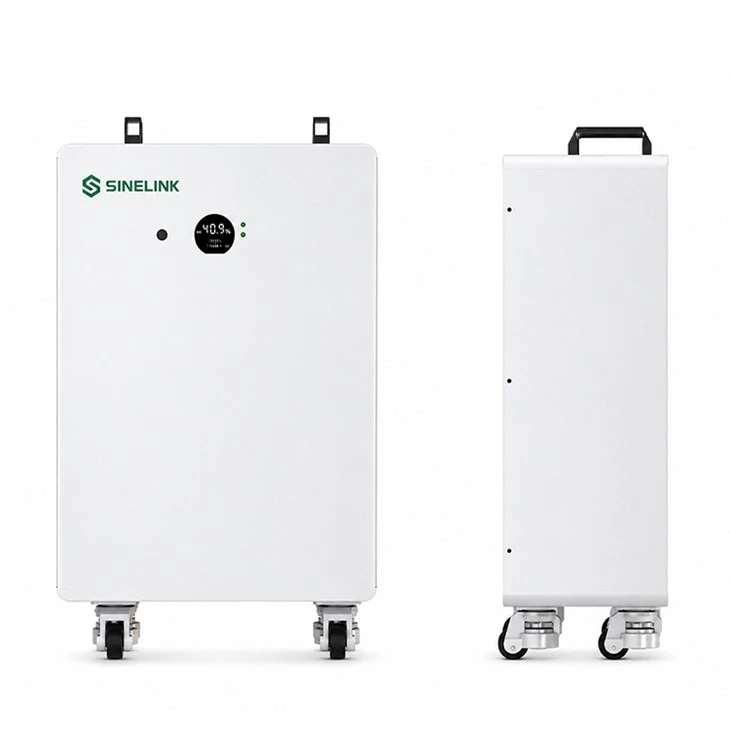
The wheeled lithium iron phosphate battery family is designed for larger low-voltage storage requirements where stable floor placement, local mobility and a clean integrated appearance are important. Four models cover 15.1–32.1kWh with LCD monitoring, screen-selectable communication protocols and concealed wiring.
Wheels assist controlled positioning; they do not make an energized battery portable. Level, restrain and protect the unit against unintended movement before connection.
Laser Welding and Quality Inspection

High‑Quality Energy Storage Welding & Automated Inspection
Energy storage battery modules are produced with automated laser welding for precise connections between cells, busbars and related components. Computer vision systems support real-time positioning and weld-quality inspection, monitoring weld location, appearance and consistency to help reduce manual variation and improve connection reliability, production consistency and long-term operational safety..
Engineering Features
-
Stable Wheeled Structure
The integrated floor-standing design combines a compact footprint with wheels for controlled placement during installation and service.
-
Screen-selectable Protocols
Battery operating data can be viewed locally, while communication protocols can be selected on the display for faster connection to compatible inverters.
-
Concealed Wiring Layout
Internal cable routing helps keep external circuits orderly and reduces exposed cable clutter around the installation.
-
High-capacity Low-voltage Options
314Ah and 628Ah configurations provide 15.1–32.1kWh for longer-duration residential, commercial backup and off-grid use.
-
Long-life LiFePO4 Chemistry
Cycle life is rated at 6000+ cycles at 80% depth of discharge. Actual service life depends on operating temperature, charge/discharge rate and usage conditions.
Complete Technical Specifications
Specifications are subject to change without prior notice.
Wheeled Battery Installation Basics
Wheels are for positioning, not routine transport
Move the isolated unit only under an approved handling procedure. Once positioned, secure it against rolling, impact and tipping before cables are installed.
Check concentrated floor loading
Battery weights range from 143 to 293kg. Verify floor capacity, levelness and the local point loads transferred through wheels or support feet.
Protect concealed cables from strain
Hidden routing improves appearance but does not replace bend-radius, separation, strain-relief and inspection requirements. Cables must not carry force if the unit shifts.
IP20 still requires a dry indoor location
Avoid water, condensation, conductive dust and uncontrolled public access. Maintain the ventilation path required by natural cooling or the intelligent fan.
Battery Aging Charge/Discharge Testing

Controlled charge and discharge cycles help evaluate battery capacity, operating stability and BMS performance. Monitoring voltage, current and temperature during aging tests helps identify abnormal behavior and assess cell consistency under load.
Recommended Applications
- Higher-capacity residential solar storage and whole-home backup
- Small commercial backup and load-shifting systems
- Off-grid sites requiring 15.1–32.1kWh per battery unit
- Indoor utility rooms where a wheeled floor-standing cabinet simplifies placement
- Compatible low-voltage hybrid inverter and UPS applications
Installation and Maintenance
- Survey access routes, door widths, floor condition and lifting equipment before delivery.
- Position on a level, load-rated surface and secure wheels or the enclosure as specified.
- Confirm polarity, cable size, protection, terminal torque and communication before energizing.
- Keep concealed wiring supported, separated and free from pinch or abrasion points.
- Review LCD alarms, voltage spread, temperature and fan condition during routine checks.
- Never move the battery while energized or with connected cables under tension.
Packing and Transport
Ship each battery in approved protective packaging with terminals insulated against short circuit. Confirm required lithium-battery test summaries, labels, documents, state-of-charge limits and carrier restrictions for the selected transport route. Keep packages upright and dry, protect them from impact, and quarantine any unit showing deformation, leakage, unusual odor or abnormal heat.

FAQ
Can the battery be rolled to another location while operating?
No. Isolate the battery and connected equipment, disconnect it safely and follow an approved movement procedure. Wheels support placement, not energized mobility.
Why does a low-voltage battery need large DC cables?
For the same power, lower voltage requires higher current. Cable size must account for current, voltage drop, installation method, temperature and protective-device coordination.
Are the 314Ah and 628Ah models the same size?
No. The 314Ah models measure 480×246×990mm, while the 628Ah models are 890×350×1060mm and substantially heavier.
Does screen-selectable protocol guarantee inverter compatibility?
No. Confirm protocol version, pinout, firmware and the approved inverter-battery pairing before ordering.
Configure the Right Wheeled Battery System
Contact SINELINK with your inverter model, required backup duration, peak power and installation conditions to find a suitable battery configuration.
Send Inquiry NowProduct configuration and supply scope are specified in your quotation.
Technical Specifications
Specifications are subject to change without prior notice.


