


COMMERCIAL EV CHARGING · LEVEL 2 AC
Commercial Level 2 charging starts with the site, not the charger.
Plan power, charger quantity and operations around parking time, vehicle demand, available capacity and the next phase of your business.
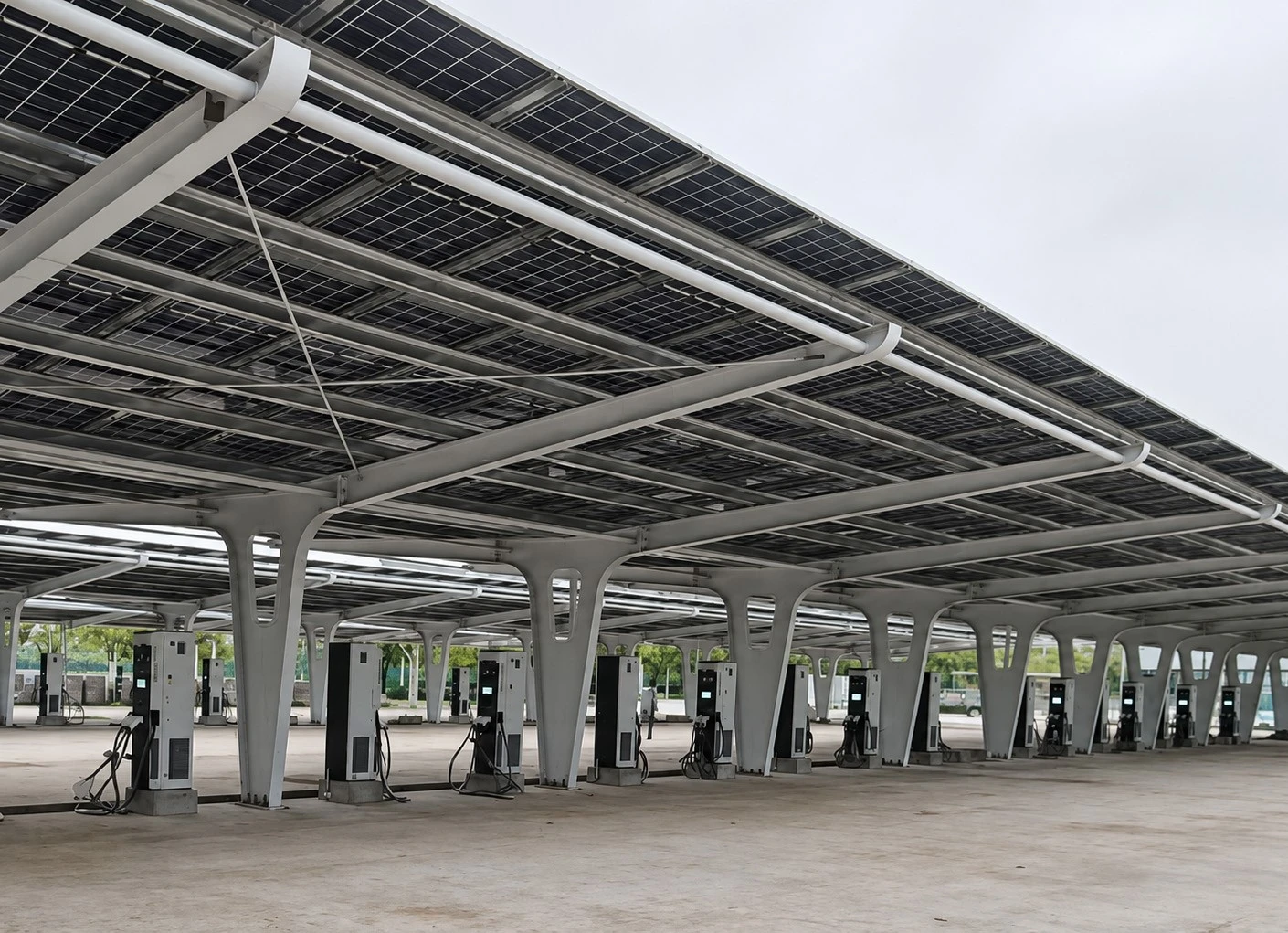
QUICK ANSWER
Level 2 AC charging is often the practical choice for workplaces, hotels, apartments, retail properties and fleets where vehicles park for several hours. The right project balances energy required before departure, vehicle AC limits, site supply, simultaneous charging demand and future expansion.
What is Commercial Level 2 EV Charging?
Level 2 charging supplies AC power to the vehicle. The vehicle's onboard charger converts that AC power into DC power for the battery. This matters because the EV charging station does not determine charging speed by itself. The vehicle, charger, electrical supply and site controls all influence the actual power delivered.
For buyers still comparing charging technologies, understanding AC and DC charging for commercial sites is a useful first step. The relevant question is not simply which charger to buy, but which charging configuration fits the way a site operates.
Long-stay and destination parking.
Vehicle AC limit and site supply.
Charger quantity and expansion routes.
Start With Parking Time, Not Charger Power
A buyer sees 7 kW, 11 kW and 22 kW and naturally assumes that higher power must be better. In practice, charger selection should begin with the vehicle's energy requirement and the time available to deliver that energy. At a workplace, a vehicle may be parked for most of the day; at a hotel, a guest may remain overnight.
A common buying mistake is to ask for 22 kW because it sounds better than 7 kW or 11 kW. For a commercial project, parking time is often more important than the charger nameplate.
- If a vehicle stays 8 hours, moderate AC power may deliver enough energy without a high site peak.
- If the vehicle stays 2 hours, higher AC power can help only if the vehicle can accept it.
- If the vehicle must leave in 30-60 minutes, the project may need DC fast charging instead.
- If many vehicles stay all day, more charging points can be more valuable than a few high-power units.
Buyers who are still unsure whether Level 2 charging is AC or DC can start with the basic explanation [A1.1]. Once that is clear, the next question is often why a 22 kW wallbox may deliver only 7 kW or 11 kW in actual use [A1.2].
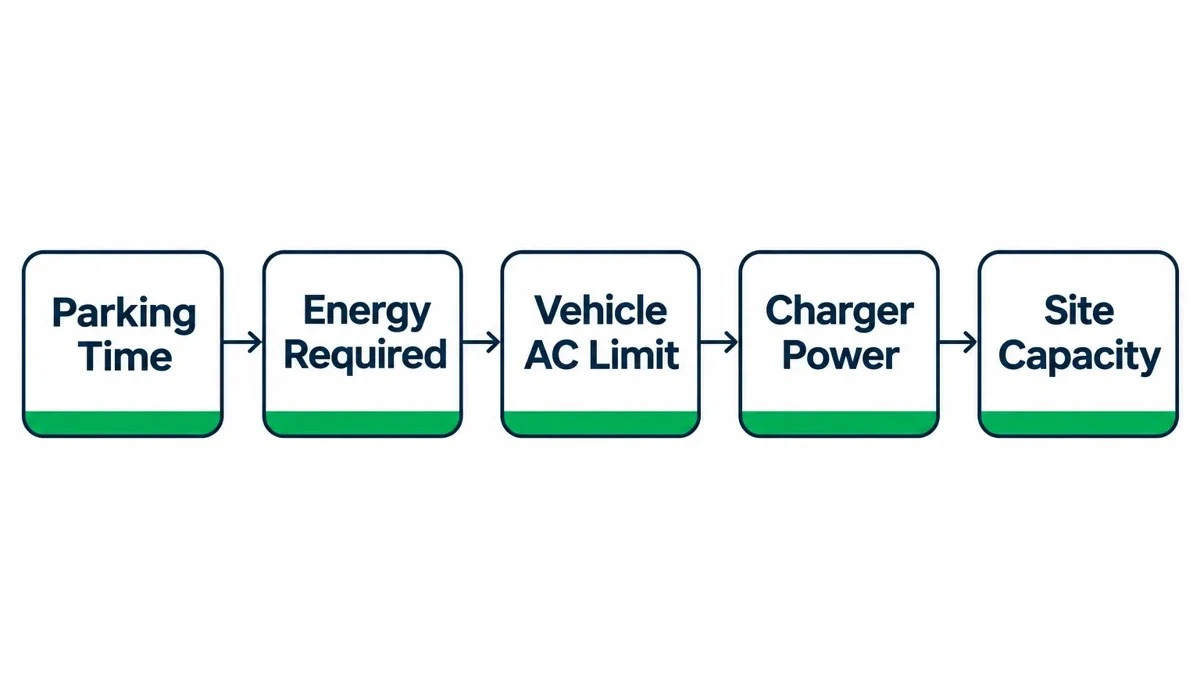
A useful planning question is: How much energy must each vehicle receive before it leaves? In the right application, moderate AC charging can be the more efficient project choice because the vehicle already has enough parking time to receive the energy it needs.
7 kW, 11 kW or 22 kW: Bigger Is Not Automatically Better
For many international Type 2 projects, commercial AC charging discussions commonly involve 7 kW, 11 kW and 22 kW configurations. A higher-power charger can require more electrical capacity, a different phase arrangement, larger upstream infrastructure and higher installation cost. The vehicle itself may not accept the full charger rating.
An installed 22 kW charger does not mean every vehicle will charge at 22 kW. Actual charging power can remain below the charger maximum because of the vehicle's onboard charger, available electrical supply, settings or load-management rules. The focused 22 kW charging-power guide [A1.2] and 7 kW vs 11 kW vs 22 kW guide [A1.3] can be linked here after publication.

Site review visual: confirm the actual electrical and installation conditions before the specification is released.
How Many Chargers Can the Site Support?
Planning ten, twenty or fifty charging points is different from selecting one charger. Charger count and charger power should be evaluated together. A site may support more charging points by intelligently distributing available power rather than simply increasing the electrical service.
For broader site-level sizing, see how to size an EV charging site without overspending.
Dynamic Load Balancing Can Change the Project Economics
Commercial buildings rarely dedicate all available capacity to EV charging. When building demand rises, EV charging power can be reduced; when other loads fall, more capacity can become available for charging. This is especially relevant for workplaces, hotels, apartments and commercial parking adding several chargers to an existing electrical system.

Illustrative allocation logic; actual controls, site capacity and operating behavior require project confirmation.
Evaluate the Dynamic Load Balancing Controller for compatible configurations, and read Dynamic Load Balancing for Commercial EV Charging for the engineering principles.
Different Commercial Sites Need Different Charging Strategies
There is no universal Level 2 charging layout. A workplace, hotel and apartment building can all use Level 2 chargers, but the operating logic can be very different.
Workplace charging
Long employee parking can suit moderate-power charging with scheduled charging or load management. Plan access, visitor use, policy and future expansion.
Hotels, retail and destination parking
Expected stay, utilization, payment or access model, visibility, cable management and future expansion all influence configuration.
Apartments and communities
Plan shared or assigned spaces, user identification, energy records, billing and gradual expansion as EV ownership increases.
Commercial parking lots and fleets
Treat the site as a charging system: capacity, parking layout, cable routes, access, communication, load management and future expansion work together.

What Should Buyers Verify Before Ordering?
Commercial Level 2 equipment should not be selected independently from the installation environment. Verify supply voltage and phase configuration, available capacity, protection, cable routes, mounting, exposure, network and backend compatibility, commissioning responsibilities and future expansion.
Charger price is only one part of commercial project cost. Distribution, switchgear, cabling, civil works, pedestals, network equipment, software, load management, commissioning and future expansion can all affect installed cost.
Use the commercial Level 2 buying checklist [L2-08] and installation requirements guide [L2-12] once published. For open parking areas, Solar Carport EV Charging Solutions [L2-10] is the dedicated integrated application page.
SINELINK Commercial Level 2 EV Charging Options
Review the complete AC Charging product range before selecting a specific model. The correct model depends on destination market, electrical supply, vehicle requirements, communication architecture and the operating model.
- H-Series Smart AC Charging Wallbox - 7.4 kW, 11 kW and 22 kW configurations with Type 2 connection options and connected charging functions.
- Izar-CE 7.4 kW AC Charger - a single-phase Type 2 platform for applications requiring moderate AC charging power and connected control.
- GS-B02 Level 2 AC Wallbox - a 240 V Level 2 family for compatible North American Type 1 applications.

Illustrative RFQ sequence. The project proposal should confirm technical scope and responsibilities.
Planning a Commercial Level 2 EV Charging Project?
Send your project country, parking application, charger quantity, target vehicles, supply voltage, phase availability, dwell time, power target, OCPP requirements, installation method and expansion plan.
sales@sinelinkenergy.com
Frequently Asked Questions
Is Level 2 EV charging AC or DC?
Level 2 charging supplies AC power to the vehicle. The vehicle's onboard charger converts that AC power into DC power for the battery.
Is 22 kW always better than 7 kW or 11 kW?
No. The correct power depends on vehicle capability, parking time, site electrical capacity and project requirements.
How many Level 2 chargers can a commercial property install?
The number depends on available capacity, charger power, simultaneous demand, building loads and whether load balancing is used.
Can Level 2 charging be combined with a solar carport?
Yes, subject to site layout, structural design, solar generation profile, electrical architecture and local project requirements.