

AC vs DC Charging: Which Does Your Commercial Site Actually Need?
Should your commercial EV charging site use AC chargers, DC fast chargers or both? The answer depends on how long drivers park, how much energy they need, and how much power your building can supply. This guide gives property owners, fleet teams and EPC buyers a simple way to decide. You will compare AC and DC by parking time, cost drivers, site power, operations and real use. Then you can build a first equipment plan and a clear RFQ.
Quick answer
AC charging often fits offices, hotels, apartments and other places where cars stay for hours. DC fast charging often fits public stops, high-turnover sites and fleets with short charging windows. A mixed site may need both. Start with driver demand and the electrical supply. Do not buy a high-power DC charger just because it has a higher number on the nameplate.

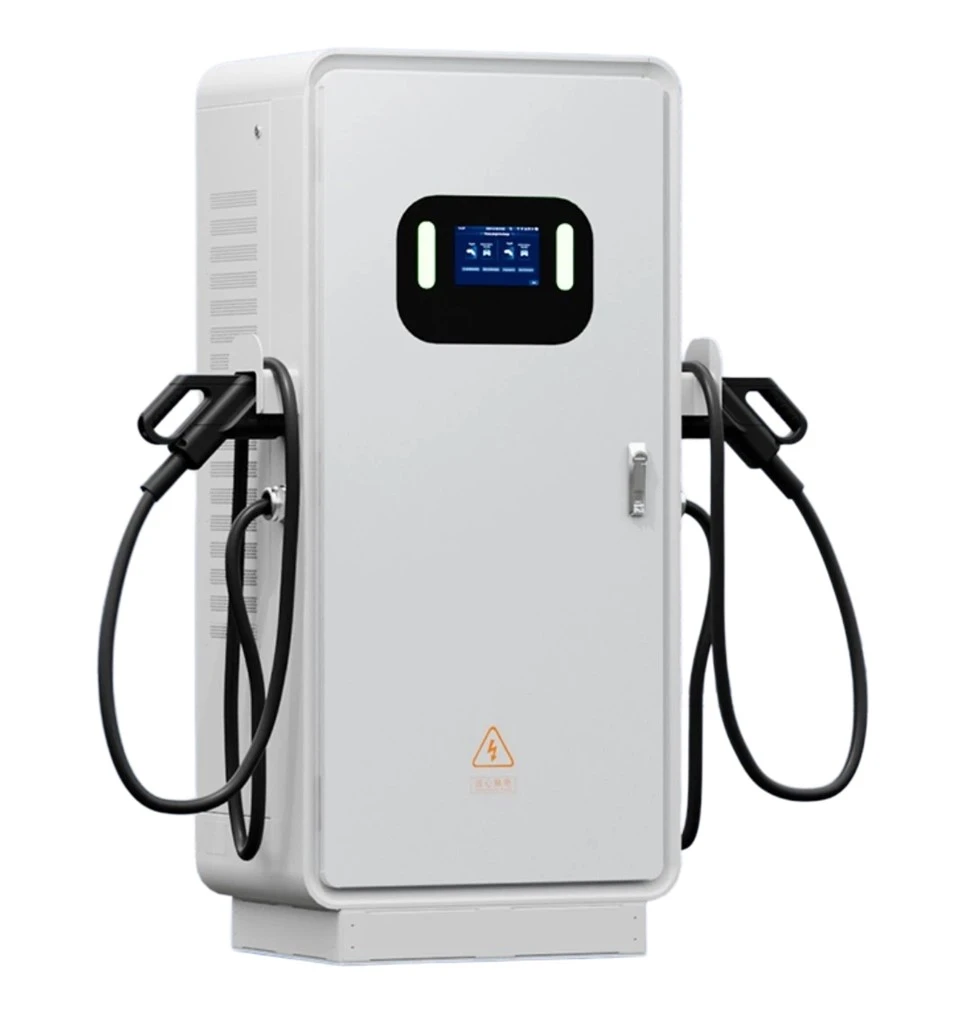
Illustrative visual, not a photographed SINELINK project or a verified product model.
1. AC vs DC Charging: The Commercial Site Decision in One Table
| Buyer question | AC charging | DC fast charging |
| Typical parking pattern | Longer stays | Shorter turnaround |
| Power path | Car onboard charger converts AC to DC | Station converts AC to DC |
| Common commercial equipment | Wallbox or AC pedestal | Integrated DC cabinet or distributed system |
| Site power need | Often lower per bay | Often higher per charger; service study needed |
| Equipment and installation | Can be simpler, site-dependent | Often more complex; civil and electrical scope grows |
| Best starting use cases | Workplace, hotel, apartment, destination | Public hub, highway stop, busy fleet or delivery site |
| Main buying risk | Too few bays or too little energy during dwell time | Oversized power, low use, grid delays or poor vehicle fit |

This is a starting guide, not a universal rule. Some workplaces need DC. Some public sites work well with AC. A vehicle may also accept much less power than the charger rating. For the basic Level 1, Level 2, and DC definitions, see EV Charging Levels Explained. For the complete commercial site plan, see the Commercial EV Charging Infrastructure Buyer's Guide.
2. Start with Parking Time, Not Charger Power
Ask one question first: how long is the vehicle parked? A staff car may stay for eight hours. A hotel guest may stay overnight. A delivery van may have only a short gap before the next trip. The available charging window often tells you more than a charger brochure.
Long-stay parking: why AC often works
AC charging can add energy over several hours. The site may install more lower-power points and serve more cars while they are parked. But the car's onboard AC charger limits how fast it can take power. A 22 kW AC wallbox does not mean every car charges at 22 kW. Some vehicles accept much less on AC.
Short-stay parking: when DC may be justified
DC charging can deliver more power during a short stop when the vehicle supports it. That may be useful at busy retail sites, service areas and fleets with tight routes. Yet a driver may not receive the rated power for the full session. Battery temperature, state of charge, voltage, current and power sharing all matter.
A mixed site can be a good answer
Some properties serve two groups. Staff park for hours, while visitors stop briefly. One plan could use AC bays for the first group and a smaller number of DC bays for the second. The right mix depends on measured demand and available power, not on a fixed AC-to-DC ratio.
3. Estimate the Energy Each Vehicle Needs
Start with energy, not only peak power. For each driver group, estimate how many kWh must be added before the vehicle leaves. Then look at the time available. This gives an average charging-power target. The installed charger may need more headroom because real charging has losses, tapering, sharing and other limits.
Simple planning example: a car needs 24 kWh during a six-hour parking window. The ideal average battery-energy rate is 24 ÷ 6 = 4 kW. That does not mean a 4 kW charger is the final design. Check charging losses, the car's onboard charger, available current, and how often the bay is occupied. A fleet with a 24 kWh need in only 30 minutes faces a very different power problem.

These numbers are arithmetic examples, not measured demand or guaranteed charger performance. For detailed capacity, diversity, and peak-demand calculations, use the planned How to Size Your Charging Site B5 article. Do not assume all cars arrive empty or all drivers need the same energy.
4. Check the Building Power and Grid Connection
A charger is part of the electrical site. Your transformer, switchboard, feeder, protective devices, and local utility rules may limit what can be installed. A high-power DC charger can create a large peak demand. The site may need upgrades, more space and longer utility approvals. AC charging can also become a large load if many bays charge at once.
Ask the site engineer for the available capacity after normal building loads. Review the daily load curve, not just one headline number. Include heating, cooling, lifts, lighting and future tenants. The final design must be completed by qualified professionals under local codes.
Power sharing and dynamic load balancing
Smart load management can limit total EV demand when the building is busy. For example, chargers may share the capacity left after other loads are served. This can improve use of existing electrical infrastructure, but it cannot create extra grid power. It may also increase the time needed to finish charging when demand is high.
SINELINK offers a Dynamic Load Balancing Controller for compatible installations. It uses a local controller and matching charger communication. Confirm model fit and site wiring. See Charging Management and the planned Dynamic Load BalancingB6 guide for the full control design.
Do not forget site layout
DC cabinets may need larger foundations, cooling clearance and cable management. AC points need safe cable reach, parking-bay access and weather protection too. Check drainage, bollards, accessibility, lighting, signage and service access. A charger that looks good on a plan can still be hard to use if the vehicle inlet is far from the cable.
5. Compare Total Site Cost, Not Only Charger Price
A low equipment price is not the same as a low project cost. AC and DC projects have different cost drivers. The correct comparison is the total cost to serve your drivers over the planned life of the site. Include civil work, grid work, software, maintenance and possible downtime.
| Cost item | Why it matters |
| Chargers and accessories | Unit price, connectors, mounting and spare parts |
| Grid and electrical work | Transformer, switchgear, cable, protection, utility approvals |
| Civil works | Trenching, foundations, drainage, signs, barriers |
| Software and payments | CSMS, connectivity, payment service, integration |
| Operations | Maintenance, cleaning, inspections, support response |
| Electricity and tariffs | Energy price, demand charges where applicable, losses |
| Downtime and replacement | Lost sessions, repairs, parts and future upgrades |
Do not assume that a DC charger always makes more money. Revenue depends on demand, charging price, uptime, energy costs, and utilization. An AC site can also underperform if drivers do not use it or bays are blocked. Build a local business case with conservative and high-demand scenarios. The planned EV Charging Station Cost: Every Line Item Buyers Forget,C9 and Utilization Rate and ROI Model will cover financial details.C10
6. Choose AC, DC or Mixed Charging by Site Type
| Commercial site | Start with | Verify before purchase |
| Office campus | AC bays for long-stay employees | Peak arrival pattern, sharing, access policy |
| Hotel or apartment | AC for overnight parking | Tenant billing, parking assignment, power capacity |
| Shopping or retail | AC for longer visits; consider DC for short stops | Actual visit duration and driver demand |
| Public highway stop | DC often suits quick turnaround | Traffic, utility power, uptime, payment |
| Urban fleet depot | Mix depends on route and return windows | Fleet energy needs, overnight windows, peak dispatch |
| Mixed-use commercial property | AC base plus DC if demand supports it | Site power, driver segments, utilization forecast |
The US Department of Energy's workplace charging guidance notes that Level 2 is commonly used in workplace settings. That is a useful reference, not a rule for every country or site. For cross-border projects, the local vehicle mix and charger interface also matter. See the planned EV Charging Connector Types by Region guide before fixing the plug configuration.
7. How to Choose Charger Power and Quantity
First, estimate how many vehicles arrive in each time window. Second, estimate energy per vehicle. Third, check dwell time and the power available to EV charging. Fourth, test how the site behaves at busy times. Finally, choose charger count and output power. A simple spreadsheet with hourly arrivals is often more useful than guessing a number of fast chargers.
Avoid the nameplate trap
A 120 kW DC charger may not deliver 120 kW to every car. For example, SINELINK's SK-N 60–120 kW DC Series lists a 250 A single-connector limit. At 200 V, 250 A is 50 kW before other limits. The cabinet rating does not override voltage and current limits. In a two-output system, the power may also be shared.
Plan for real-world peaks and growth
Do not size every bay as if it runs at full power all day. But do not ignore busy periods either. Model different arrival patterns and a reasonable growth case. If your fleet will change, ask about higher-voltage vehicles, connector changes and future software support. The planned Demand Charges and Site Selection11 and Grid Connection will cover two separate planning risks12.

8. AC vs DC Equipment: What SINELINK Product Pages Show
SINELINK's H-Series Smart AC Wallbox page lists 7.4, 11 and 22 kW models for the stated variants. It also describes connected controls and load balancing. This can be a starting point for workplaces and long-stay parking. Check supply type, vehicle AC limits, socket/cable format and the exact model you plan to order.
For DC charging, SINELINK lists SK-N 60–120 kW integrated chargers and SEV1000 240–400 kW high-power integrated chargers. These product families suit different site scales and electrical conditions. Do not treat their cabinet ratings as guaranteed per-car output. Confirm output voltage range, connector current, simultaneous charging and utility service before selecting a model.
A large hub may also consider distributed DC fast charging systems, where power units and charging terminals are separated. That is a different equipment architecture decision. The planned Split-Type vs Integrated DC Charging7 will compare that choice in detail.
9. A Practical AC/DC Project RFQ Checklist
- Destination country, city, and site type.
- Parking spaces, average stay and peak arrival hours.
- Vehicle makes, model years, battery/charging capabilities and connector types.
- Daily energy target in kWh and desired charging window for each group.
- Existing electrical supply, spare capacity and utility constraints.
- Preferred AC, DC or mixed layout; number of outputs and simultaneous use.
- Load balancing, network/OCPP, user access and payment requirements.
- Site climate, installation location, cable reach and accessibility.
- Local compliance, metering, installer and maintenance needs.
- Expansion plan, project schedule, service expectations and budget range.
Ask for a proposed equipment schedule and site assumptions. Keep assumptions separate from verified site measurements. If the charger connects to a CSMS, confirm the exact protocol and tested functions. The planned OCPP 1.6J vs OCPP 2.0.1 covers that software decision. For a wider plan, visit EV Charging Solutions.
10. Get an AC/DC Charging Plan for Your Site
Explore AC Charging products, DC Charging products, and the EV Charging product hub. Tell SINELINK how many vehicles you serve, how long they stay, how much energy they need, and what electrical power is available. We can help review a starting equipment mix against the available product options. Final equipment selection needs a local electrical and installation review.
Email sales@sinelinkenergy.com. The right charger is not simply the fastest one. It is the one that fits the drivers, the site power and the way the property will operate every day.
Build your site around real demand
Send the vehicle count, dwell time, energy need and available electrical capacity. Start with a reviewable equipment mix before asking for a final quotation.
Send project requirementsFAQ
Is AC or DC charging better for a commercial parking lot?
It depends on parking time, driver demand, and electrical capacity. AC often works for long stays. DC can help where vehicles need a shorter turnaround. Some sites need both.
Can a 22 kW AC charger charge every car at 22 kW?
No. The vehicle's onboard AC charger, the supply and site controls can limit power. Check the actual vehicle models before selecting AC charger ratings.
Does a 120 kW DC charger always deliver 120 kW?
No. Vehicle voltage, current limits, battery conditions and power sharing can reduce actual output. Check the charger power envelope and the target vehicles.
Can a commercial site install AC and DC chargers together?
Yes, if the electrical design, parking layout, and operations support both. A mixed site can serve long-stay and short-stay drivers with different equipment.
How do I estimate the number of EV chargers needed?
Start with arrivals, energy needed per vehicle, dwell time, peak periods, and available site power. Model busy hours before choosing charger count.
Can load balancing remove the need for a grid upgrade?
It may help keep EV demand within an existing site limit. It cannot create more electrical capacity, and it may slow charging at busy times. A site engineer must confirm the design.
Is DC charging always more profitable than AC charging?
No. Profit depends on utilization, pricing, energy costs, grid charges, installation cost and uptime. Use a local business case instead of assuming faster charging means higher returns.
What should I send a supplier for an AC/DC site proposal?
Send your location, site type, parking count, vehicle list, charging windows, daily energy needs, electrical supply, software needs and expansion plans.