

QUICK ANSWER
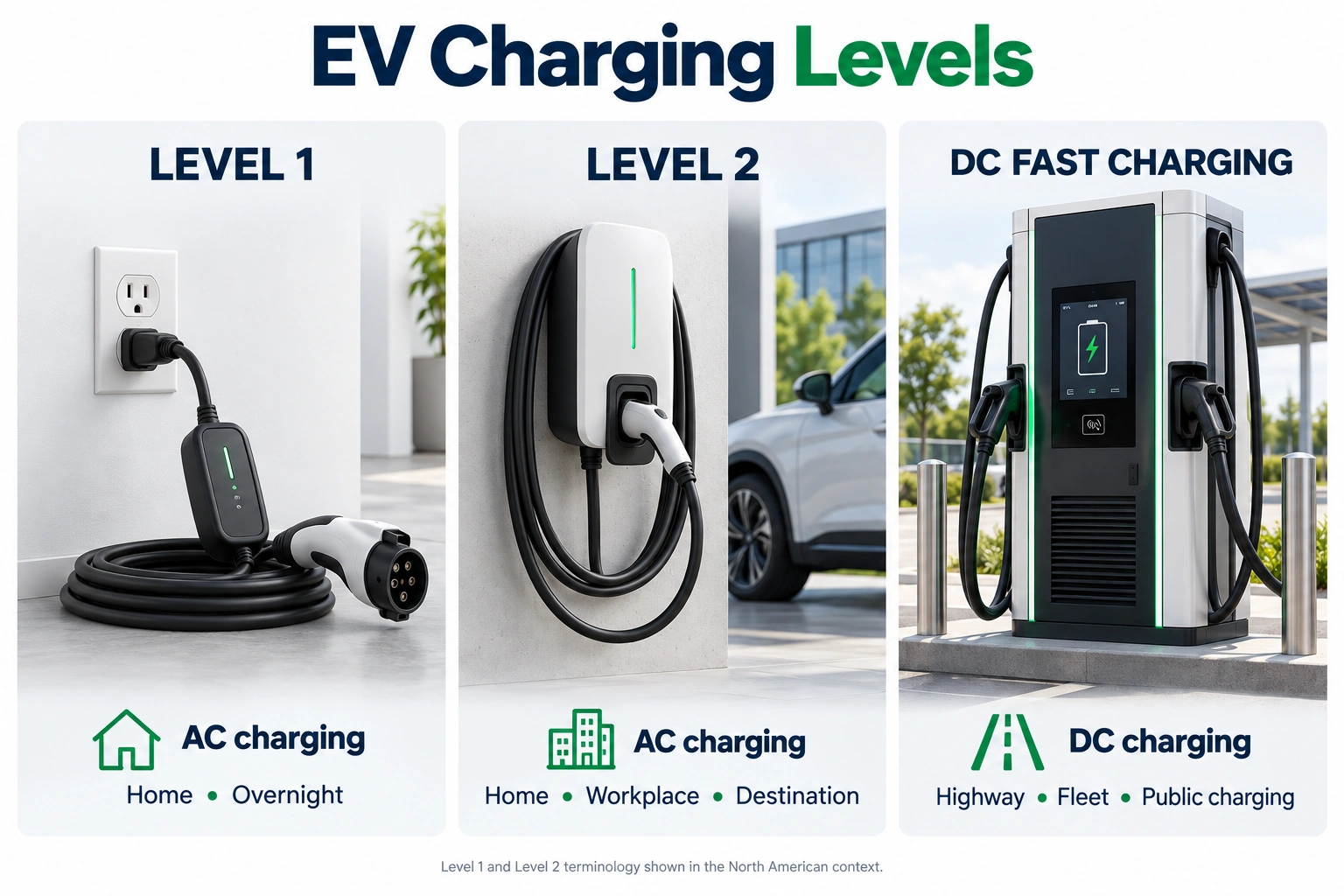
EV charging levels describe different ways of delivering power to an electric vehicle, but the terminology varies by market. In North America, buyers commonly compare Level 1 AC charging, Level 2 AC charging and DC fast charging, which is often informally called Level 3. The practical differences include charging power, the equipment involved, installation requirements and how long a vehicle can remain parked.
For B2B buyers, the right choice is not automatically the charger with the highest power rating. A suitable configuration depends on vehicle compatibility, daily energy demand, parking time, available electrical capacity, connector requirements and how many vehicles need to charge at once.
For the complete project-planning framework-including grid capacity, procurement, costs and compliance-see our Commercial EV Charging Infrastructure: The Complete Buyer's Guide. This article focuses specifically on understanding charging levels and choosing between AC and DC charging.
Contents
- What Are Level 1, Level 2, and DC Fast Charging?
- Level 1 vs Level 2 vs DC Fast Charging: Quick Comparison
- What Is Level 1 EV Charging?
- What Is Level 2 EV Charging?
- What Is DC Fast Charging?
- AC Charging vs DC Fast Charging: Which Should You Choose?
- Why Charger Power Does Not Equal Actual Charging Speed
- How to Choose the Right EV Charging Level for a B2B Project
- Project Input Checklist: What to Send an EV Charger Supplier
- SINELINK EV Charging Solutions for Different Applications
- Need Help Selecting a Charging Configuration?
What Are Level 1, Level 2, and DC Fast Charging?
To check vehicle-side interface compatibility across markets, see EV charging connector types by region.
Level 1 is low-power AC charging commonly associated with a standard 120 V household outlet in North America. Level 2 is higher-power AC charging, typically using dedicated charging equipment and a suitable circuit. DC fast charging converts grid AC power to controlled DC power inside the charging station and supplies DC to a compatible vehicle. Because "Level 3" is not a universal global classification, DC fast charging is the clearest term for international B2B content.
Level 1 vs Level 2 vs DC Fast Charging: Quick Comparison
| Feature | Level 1 AC | Level 2 AC | DC fast charging | Buyer implication |
| Power delivery | AC | AC | DC from station | Confirm the vehicle's supported charging method |
| Typical power context | North America: about 1–1.8 kW | Often several kW to 19.2 kW in North America; international AC models vary | Commonly tens to hundreds of kW | Use exact model ratings, not generic labels |
| Typical use | Low mileage, long parking, backup | Home, workplace, hotel, destination parking | Public rapid charging, fleets, high-turnover sites | Start with dwell time and operating need |
| Power conversion | Inside vehicle | Inside vehicle | At charging station | Vehicle capability may limit delivered power |
| Site requirements | Lower power, compliant circuit | Dedicated circuit and capacity review | Higher-capacity supply and site engineering | Installation is part of selection |
| Best fit | Charging time is not critical | Vehicle stays parked for hours | Shorter turnaround matters | Highest power is not always the best investment |
What Is Level 1 EV Charging?
How Level 1 Charging Works
Level 1 charging generally uses a standard 120 V AC outlet in North America and portable charging equipment. Available power is limited, so it adds energy relatively slowly compared with a dedicated AC wallbox or DC fast charger. Actual power depends on the supply, circuit, equipment, and vehicle.
When Does Level 1 Make Sense?
Level 1 can be practical for low daily mileage, long overnight parking, occasional use or as a backup where a higher-power circuit is unavailable. It is usually not the first choice for commercial sites that need vehicles to return to service quickly or support several users during a limited parking window.
Is Level 1 Suitable for Commercial Projects?
It may suit a small number of long-stay parking spaces, but the required daily energy must be compared with the available charging time. For workplaces, hotels, apartment parking and fleet depots, Level 2 AC charging may offer a more practical balance between energy delivered, site capacity and installation cost.
What Is Level 2 EV Charging?
How Level 2 AC Charging Works
Level 2 uses higher-power AC supply and dedicated charging equipment. The vehicle's onboard charger converts incoming AC electricity into DC for the battery. The actual rate is limited by the lowest applicable limit among the supply, charging equipment, cable and vehicle onboard charger.
Typical Applications for Level 2 Charging
Level 2 is commonly used for residential charging, apartment parking, workplaces, hotels, shopping centres, destination parking and fleet vehicles that remain parked for several hours. In international markets, comparable AC wallboxes may be specified by actual power, phase, voltage and connector rather than the North American "Level 2" label.
For commercial and international projects, review SINELINK's AC charging products and confirm power, connector, communication options, and local electrical configuration.
For example, the AC Wallbox Type 2 Series lists 3.5–22 kW models for home and commercial use. Select the exact model against site supply, vehicle capability, and market requirements.

H-Series AC wallbox for home, workplace and destination charging applications.
Why Level 2 Matters for Commercial Sites
For the differences between backend protocol versions, see OCPP 1.6J vs OCPP 2.0.1 [URL PENDING - A3]. This planned comparison will complement the existing EV charging protocols guide.
When vehicles remain parked for hours, AC charging can support more parking positions without requiring every bay to have a high-power DC charger. For multi-charger installations, access control, charging schedules, network connectivity and load management can be as important as an individual unit's rated power.
For commercial charging networks, communication and backend integration should also be reviewed. Our existing EV charging protocols guide explains the communication layers; the planned A3 article will compare OCPP versions in more detail.
What Is DC Fast Charging?
When evaluating larger charging installations, see split-type vs integrated DC charging [URL PENDING - B7] for layout and architecture considerations.
How DC Fast Charging Works
A DC fast charger converts AC electricity to controlled DC power at the station and delivers it to a compatible EV battery. This supports higher charging power than typical AC charging, although actual output depends on the vehicle's DC charging capability, battery condition, state of charge, temperature and station limits.
Common DC Fast Charger Power Ranges
Commercial DC fast chargers span a broad range-from compact units around 30–40 kW to 60–120 kW, 160–240 kW and higher-power systems. These are product power ranges, not universal charging-level definitions. The best fit depends on throughput, grid capacity, vehicle mix and the economics of each charging session.
Explore SINELINK's DC charging products for compact and higher-power charging applications.
For larger sites that need power shared across several dispensers, review distributed DC fast charging systems and evaluate the architecture against site power and operating schedules.
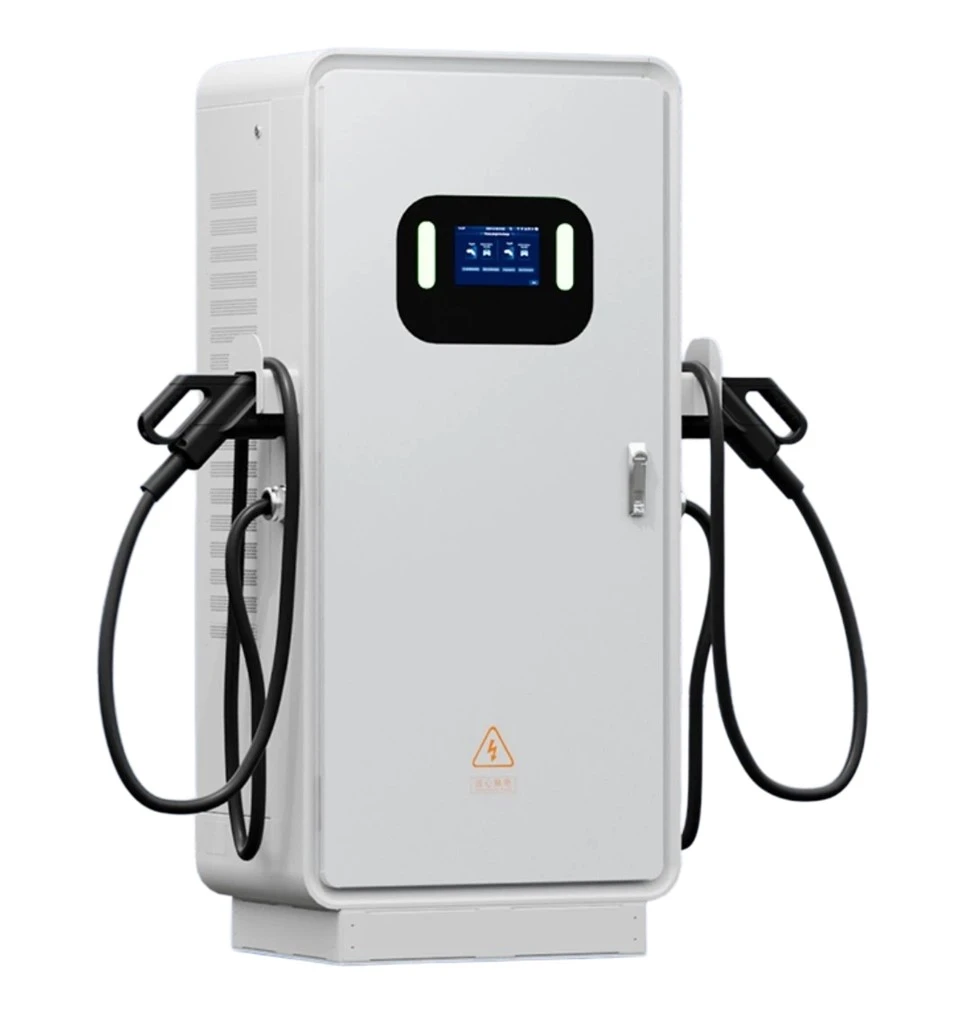
Integrated DC charging equipment supports sites that need shorter charging windows and higher output.
Where Is DC Fast Charging Most Useful?
- Public charging hubs and highway service areas where drivers need to add energy during a shorter stop.
- Fleet depots and logistics sites where vehicles must return to service within a defined window.
- Commercial locations with high charging turnover or limited vehicle dwell time.
- Sites where electrical service and the business case can support higher-power equipment.
AC Charging vs DC Fast Charging: Which Should You Choose?
For a deeper engineering and procurement comparison, see AC vs DC charging for commercial sites [URL PENDING - A4].
AC charging is generally better for routine charging when vehicles remain parked for hours. DC fast charging is more appropriate when a site needs to deliver more energy in a shorter period. Many projects use a mix rather than choosing only one charging type.
| Project scenario | Starting point | Why it may fit | Key checks |
| Residential/private parking | AC wallbox | Long parking periods allow slower charging | Supply phase, vehicle AC limit, connector, protection |
| Office/workplace | Networked AC; DC if dwell time is short | Vehicles may stay through a work shift | Parking duration, access, simultaneous demand, load management |
| Hotel/retail/destination | AC or mixed AC/DC | Customer dwell times vary | Turnover, business model, site power, backend |
| Public rapid-charging hub | DC fast charging | Short sessions and higher throughput | Vehicle compatibility, grid capacity, connector, utilization |
| Fleet/logistics depot | AC, DC or mixed architecture | Depends on routes, shifts and charging windows | Fleet size, daily energy, departure schedule, site power |
| Large multi-dispenser site | Assess distributed DC | Centralized power may be shared across points | System power, dispenser count, sharing logic, expansion |
Why Charger Power Does Not Equal Actual Charging Speed
For site-wide power sharing and electrical capacity, see dynamic load balancing for EV charging [URL PENDING - B6].
A charger's nameplate power is a rated capability, not a guarantee that every connected vehicle will continuously receive that power. Actual charging is constrained by the whole charging chain and operating conditions.
- Vehicle acceptance limit: AC vehicles are limited by the onboard charger; DC vehicles are limited by their supported DC charging curve and interface.
- Available site power: the electrical service, transformer, other building loads and power-sharing controls may limit charger output.
- Battery state of charge: DC charging power commonly tapers as the battery approaches a higher state of charge.
- Battery temperature and condition: the vehicle may limit power to protect the battery.
- Connector and current limits: delivered power depends on the actual voltage-current operating point and selected equipment configuration.
For B2B buyers, a higher-power charger should be selected only when the vehicle mix, site infrastructure and operating model can use that power productively.
For sites with several charging points, see SINELINK's charging management options to assess power allocation and system-control requirements.
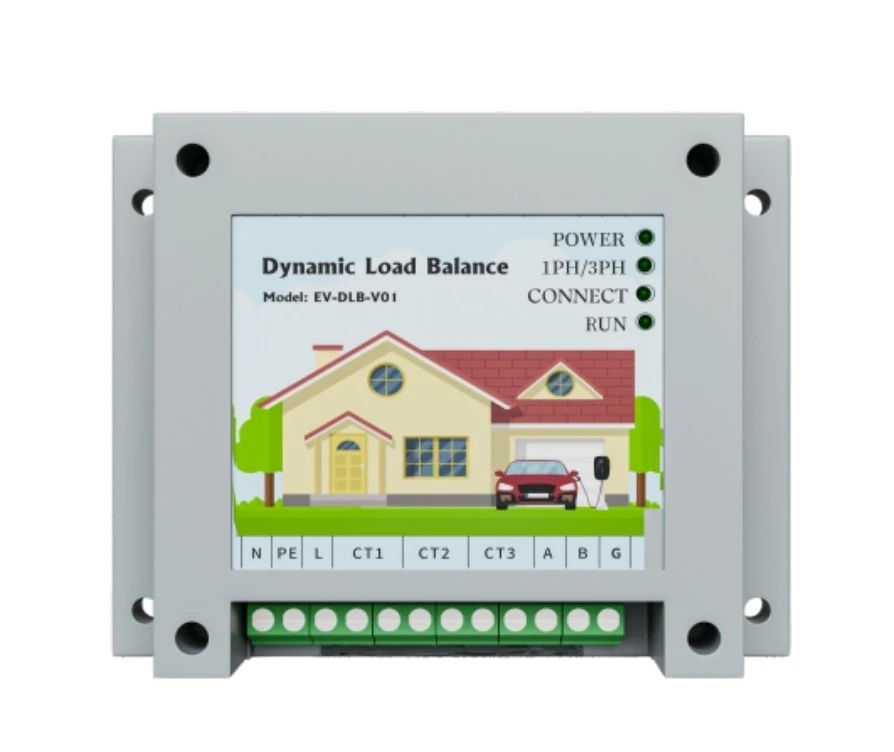
Charging management can allocate available site capacity across several active charging points.
How to Choose the Right EV Charging Level for a B2B Project
For the calculations behind charger quantity, simultaneous load and spare site capacity, see how to size your EV charging site [URL PENDING - B5].
- Define the application: home, workplace, hotel, commercial parking, public charging hub or fleet depot.
- List the vehicles: quantity, type, market, connector and maximum AC/DC charging acceptance where known.
- Estimate energy demand: daily mileage or duty cycle, energy required per vehicle and sessions per day.
- Set the charging window: how long vehicles remain parked and when they must be ready to leave.
- Confirm site supply: country, voltage, phase, frequency, service capacity, transformer limits and other major loads.
- Specify interfaces and software: connector, payment/authentication, OCPP/backend needs, remote monitoring and load management.
- Confirm environment and compliance: indoor/outdoor location, temperature, enclosure, applicable standards, local approvals and installation rules.
- Plan for growth: future charger count, site expansion and maintenance access.
Project Input Checklist: What to Send an EV Charger Supplier
For a destination-market documentation checklist, see EV charger certification requirements [URL PENDING - D14] before issuing the final RFQ.
| Input | Example/details | Why it matters |
| Destination market | Country and region | Voltage, connector, certification and local requirements |
| Application | Workplace, public site, fleet depot, hotel | Shapes charger type and operating model |
| Vehicle quantity/type | Passenger cars, vans, buses or mixed fleet | Defines compatibility and simultaneous demand |
| Charging schedule | Arrival/departure times and dwell time | Shows available charging window |
| Daily energy need | kWh per vehicle or route estimate | Supports preliminary power and quantity sizing |
| Site supply | Voltage, phase, frequency, available kW | Checks infrastructure capacity |
| Connector | CCS1, CCS2, NACS, Type 1, Type 2 or other | Must match vehicles and target market |
| Networking/payments | OCPP/backend, RFID, app, QR, payment terminal | Affects software and operations |
| Quantity/layout | Bays, cable reach, indoor/outdoor | Affects layout and power distribution |
| Future expansion | Planned additions or higher utilization | Avoids an inflexible first-stage design |
SINELINK EV Charging Solutions for Different Applications
SINELINK's EV charging range covers AC wallboxes, integrated DC charging stations, distributed DC fast-charging systems and charging-management options. The suitable configuration should be selected against destination market, vehicle mix, available site power and operating requirements-not charger power alone.
Start with SINELINK EV Charging Solutions to compare product categories and system architectures.
For connected AC projects, review the H-Series Smart AC Charging Wallbox for networked charging and multi-charger load-management use cases, subject to the ordered configuration.
For mixed-brand integration requirements, review Multi-Brand EV Charger Control & Integration and confirm required interfaces and functions with the engineering team.
Need Help Selecting a Charging Configuration?
Send SINELINK your destination market, vehicle quantity and type, daily energy requirement, charging window, available electrical capacity, connector preference and networking requirements. Our team can review the information and help identify a preliminary AC, DC or mixed charging configuration for your project.
Frequently Asked Questions
What are Level 1, Level 2 and Level 3 EV charging?
In common North American terminology, Level 1 is low-power AC charging, Level 2 is higher-power AC charging, and "Level 3" is often used informally for DC fast charging. Terminology and electrical configurations vary by market, so international specifications should state AC/DC type, voltage, power and connector.
What is the difference between Level 2 and DC fast charging?
Level 2 supplies AC power and relies on the vehicle's onboard charger to convert it to DC. A DC fast charger performs conversion at the station and supplies controlled DC power to a compatible vehicle. DC can deliver higher power but requires compatible vehicles and site infrastructure.
Is Level 3 the same as DC fast charging?
"Level 3" is a common informal term for DC fast charging, particularly in North American usage, but it is not a universal global classification. For international B2B content and specifications, DC fast charging is clearer.
Which EV charging level is best for commercial properties?
It depends on parking duration, turnover, vehicle demand and electrical capacity. AC often suits workplaces, hotels and destination parking where vehicles stay for hours. DC fast charging suits locations where vehicles need to recover energy in a shorter period.
Is Level 2 charging suitable for fleet depots?
It can be suitable when vehicles remain parked long enough to recharge between shifts. Fleets with short turnaround windows or high daily energy demand may need DC charging or a mixed AC/DC configuration.
Does a higher-power EV charger always charge faster?
No. Actual power is limited by vehicle capability, battery state and temperature, site power availability and the charger's operating limits. A higher-rated charger may not provide a faster session if the vehicle cannot accept its full output.
Can every electric vehicle use a DC fast charger?
No. The vehicle must support DC fast charging and use a compatible charging interface and communication method. Confirm vehicle model, connector standard and market configuration before selecting equipment.
What information should I provide when sourcing EV chargers for a project?
Provide destination country, application, vehicle quantity/type, daily energy demand, parking or charging window, available electrical supply, connector, networking/payment requirements, installation environment and future expansion plan.
Request an EV Charging Configuration
Share your destination market, vehicle requirements, charging window, site power and connector needs to start a technical review.
Send Project Requirements →