

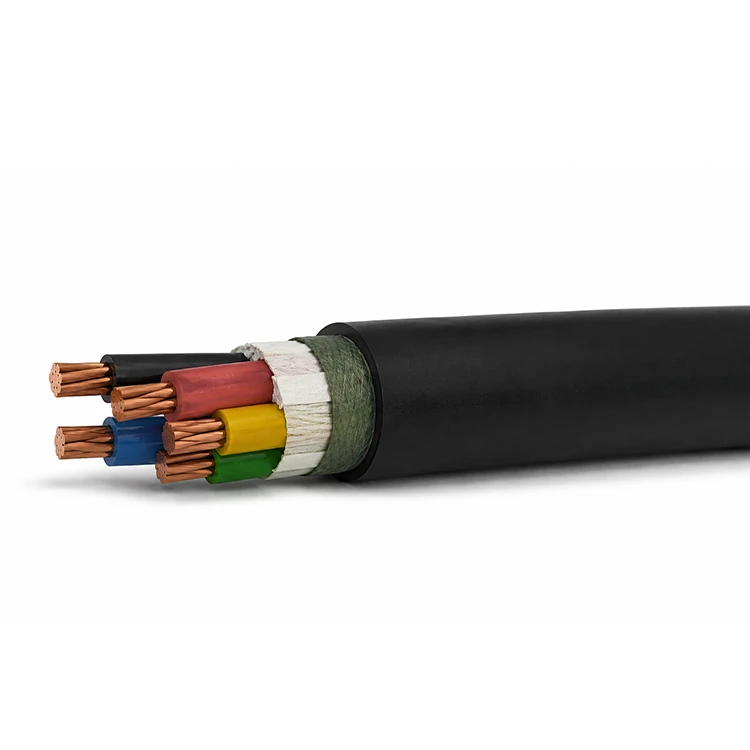
LSZH Flame-retardant Low-voltage AC Power Cable
Copper-conductor power cables combining XLPE insulation with low-smoke, halogen-free materials. The WDZ-YJY family offers unarmored, steel-tape armored and steel-wire armored options for project-specific low-voltage distribution.

0.6/1 kV
Rated voltage
90°C
Maximum continuous conductor temperature
A / B / C
Flame-retardant grade options
Low Smoke. Zero Halogen. Flame Retardant.
Low Smoke
Designed to limit smoke generation under defined fire-test conditions, helping preserve visibility.
Halogen-free
Uses halogen-free insulation-system components and sheath materials to limit halogen-related emissions. It does not mean combustion gases are harmless.
Flame Retardant
Designed to limit flame spread. This does not establish circuit integrity during a fire; that requires a separately specified fire-resistant cable.
Cable Construction
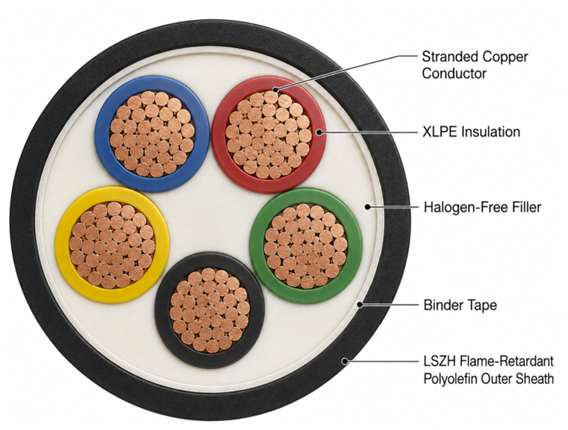
Copper + XLPE
Stranded copper conductor with XLPE insulation.
Halogen-free Core Assembly
Halogen-free filler and binder tape.
LSZH Outer Sheath
Low-smoke, halogen-free, flame-retardant polyolefin. Armor is included in the selected armored variant.
Operating & Installation Characteristics
D = overall cable diameter. Cold-weather handling follows the installation procedure for the selected cable.
Available Model Range
Understanding Flame-retardant Grades
A, B and C identify different bunched-cable flame-test categories. They use different amounts of non-metallic cable material and flame application times; they are not minutes of guaranteed power supply in a fire.
Use the specified test standard and report to select the grade. The WDZ designation alone does not establish a tested category. Category D is a separate small-cable test category and is not listed in this model range.
Test-category references: CEI / IEC Category A · IEC Category B · IEC Category C
What Materials Make LSZH Possible?
LSZH performance comes from a coordinated material system, not simply a sheath label. Common cable-compound technologies include:
Polyolefin Base Materials
Polyethylene-based compounds and blends provide the polymer base. Material selection balances flexibility, strength and processing performance.
Mineral Flame Retardants
Aluminum hydroxide (ATH) and magnesium hydroxide (MDH) are widely used in halogen-free cable compounds to support flame retardancy and smoke suppression.
A Balanced Formulation
Filler dispersion and loading affect flame performance as well as mechanical properties. The finished cable construction must be evaluated, not just the raw compound.
These are common industry approaches; they do not identify the proprietary formulation of an individual cable. Material background: Borealis HFFR compounds · Huber ATH / MDH materials.
Three Properties. Separate Verification.
Flame Spread
Bunched-cable testing evaluates how flame propagates through a defined cable arrangement.
Smoke Density
IEC 61034 methods evaluate smoke density under defined burning conditions.
Combustion Gases
IEC 60754-1 addresses halogen acid gas content from cable materials. A result does not establish that all fire gases are non-toxic.
Packing & Project Delivery

Plan the Length. Simplify the Delivery.
Drum lengths and packing requirements can be discussed around the cable schedule, handling equipment and delivery plan.
Include the required size, total length, preferred drum length and destination in your inquiry.
Specify the Cable Around Your Project
Electrical Design
Provide voltage, core configuration, conductor size and quantity.
Fire Performance
State the required flame-test category, smoke and halogen criteria, and target market.
Installation & Delivery
Share the route, armor requirements, drum lengths and delivery destination.
Build Your LSZH Cable Specification.
Send your cable schedule and project requirements to SINELINK.
Request a Quotation →


