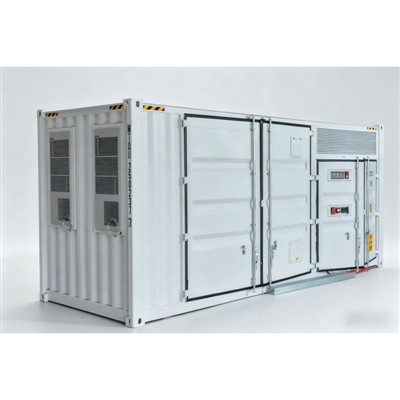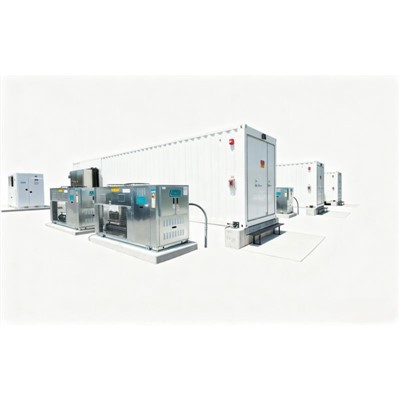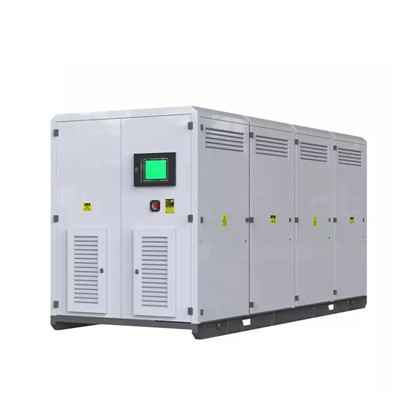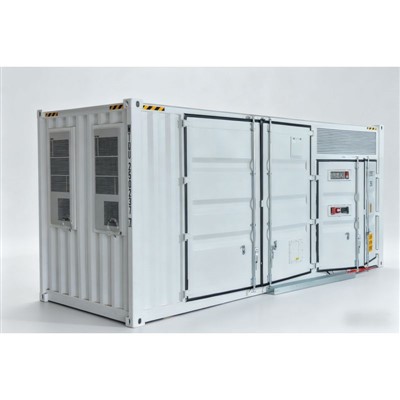
Product Overview
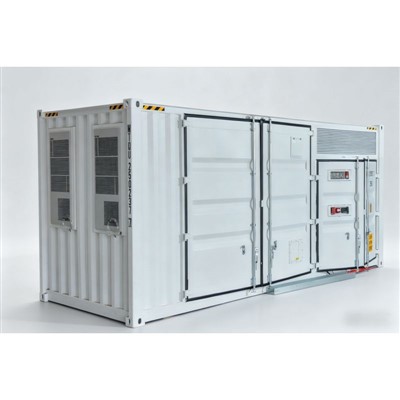
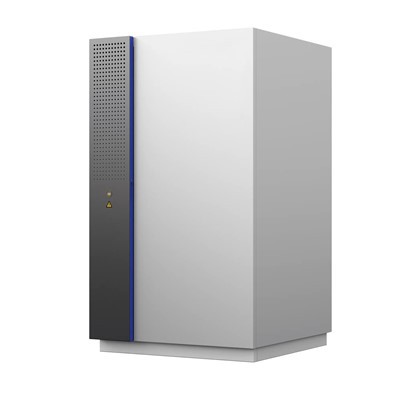
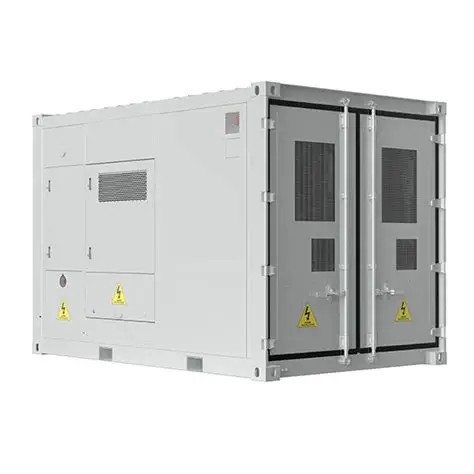
The Medium Voltage Industrial ESS connects directly to 6kV, 10kV, or 35kV distribution networks ,eliminating the step-down transformer that low-voltage systems require and cutting conversion losses, footprint, and cabling cost in the process. This is storage built for the scale of heavy industry: cement plants, steel mills, petrochemical complexes, port terminals, and utility substations where megawatt-class power and multi-megawatt-hour capacity are baseline requirements, not stretch goals.
The architecture uses a cascaded H-bridge (CHB) or modular multilevel converter (MMC) topology to synthesize medium-voltage AC directly from distributed battery modules. Each module operates independently with its own BMS and DC/AC stage, providing inherent redundancy.
Technical Specifications
|
Parameter |
Specification |
|
Battery Chemistry |
LFP (LiFePO₄) |
|
System Capacity |
2MWh-50MWh+ |
|
Rated Power |
1MW-25MW |
|
MV Output Voltage |
6kV/10kV/35kV |
|
Converter Topology |
Cascaded H-Bridge (CHB) or MMC |
|
Output Waveform |
Near-sinusoidal, THD < 2% |
|
Round-Trip Efficiency |
≥ 90% (DC to MV AC, including conversion) |
|
Reactive Power |
4-quadrant, ±1.0 PF range |
|
Fault Ride-Through |
LVRT/HVRT per IEC/IEEE grid codes |
|
Redundancy |
N+1 module-level bypass; hot-swappable modules |
|
Cooling |
Liquid cooling |
|
Communication |
IEC 61850, Modbus TCP, DNP3, SCADA integration |
|
Protection |
MV switchgear with vacuum circuit breaker, differential protection |
|
Operating Temperature |
-25 °C to +55 °C |
|
Certifications |
IEC 62619, IEC 62477, IEC 61000 series, CE |
|
Design Life |
20 years |
|
Footprint (10 MWh reference) |
≈ 200 m² |
Why Medium Voltage
Low-voltage storage systems (<1,000V) work well up to a point. Beyond a few hundred kilowatts, the current becomes enormous, requiring heavy copper busbars, large PCS cabinets, and a step-up transformer to reach the plant's MV bus. Every conversion stage adds loss, cost, and failure points.
A medium-voltage ESS skips the transformer entirely. The converter generates MV AC natively, connecting directly to the plant's 10 kV or 35 kV switchgear. The result: 2-3% higher system efficiency, 30-40% smaller footprint, significantly less copper, and fewer points of failure. For projects above 2 MW, the economics strongly favor MV architecture.
Core Applications
Large-Scale Industrial Peak Management
Heavy industrial facilities with demand peaks in the multi-megawatt range benefit from direct MV connection. The system shaves peaks at the MV bus level, upstream of all facility transformers, maximizing the impact on billed demand.
Utility Substation Support
Installed at distribution substations, the MV ESS provides capacity firming, voltage regulation, and deferral of transformer upgrades. It connects to the substation bus without additional transformation, simplifying protection coordination.
Renewable Integration at Scale
Large solar or wind farms connected at MV level can pair with MV storage for ramp-rate control, curtailment recovery, and firm capacity delivery, all at the same voltage level as the generation asset.
Typical Application Scenarios
Cement Plant with 35kV Internal Distribution
A cement plant with 15MW average load and 22MW peaks during kiln start-up and raw mill operation deployed a 20MWh/10MW medium-voltage ESS connected directly to its 35kV bus. The system absorbs kiln start-up transients and shaves demand peaks by 7MW, reducing the plant's contracted capacity from 22MW to 15MW.
Port Container Terminal
A container terminal operates 12 ship-to-shore (STS) cranes and 40 rubber-tired gantry (RTG) cranes on a 10kV distribution network. Simultaneous crane operations create demand spikes of 8 MW above baseline. A 10MWh/5MW MV ESS installed at the terminal's main 10kV switchgear absorbs crane peak loads and captures regenerative energy during container lowering. The terminal avoided grid capacity upgrade and reduced peak demand charges by 35%.
Utility Distribution Substation Deferral
A regional utility faces a 10kV distribution transformer nearing its rated capacity during summer cooling peaks. Replacing the transformer would cost $1.8M and require a 6-month outage. Instead, a 5MWh/2.5MW MV ESS was installed at the substation, providing 2 hours of peak support during the 4-month summer season. The transformer upgrade is deferred by 5–7 years, and the ESS earns additional revenue through frequency regulation during off-peak months.
Petrochemical Complex with Critical Process Loads
A petrochemical facility requires uninterrupted power to exothermic reactor cooling systems. A 10MWh MV ESS provides 15 minutes of ride-through at full reactor cooling load during grid disturbances, enough time for backup generators to synchronize and assume load. The MV connection ensures the storage system operates at the same voltage level as the critical process bus, eliminating transformer transfer delays and voltage conversion losses.
Project Delivery
Medium-voltage ESS projects are engineered to order. Our delivery scope includes:
• System design and MV single-line diagram integration
• Factory acceptance testing (FAT) with customer witness
• Containerized or skid-mounted delivery
• MV switchgear, protection relays, and metering
• On-site commissioning, protection relay coordination, and grid code compliance testing
• IEC 61850 communication integration with existing SCADA
Typical project timeline from order to commissioning is 16-24 weeks depending on system size and site readiness.
Applicable Standards
IEC 62619 (Battery safety) · IEC 62477 (Power electronic converter safety) · IEC 61850 (Substation communication) · IEC 61000-6-2/6-4 (EMC) · IEC 60076 (Transformer, if auxiliary transformer included) · IEEE 1547 / EN 50549 (Grid interconnection) · Local MV grid codes as applicable.
Hot Tags: medium voltage industrial ess, China medium voltage industrial ess manufacturers, suppliers, factory