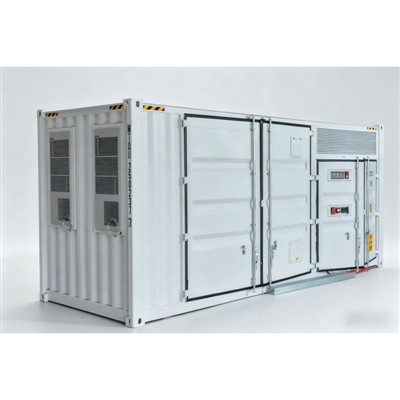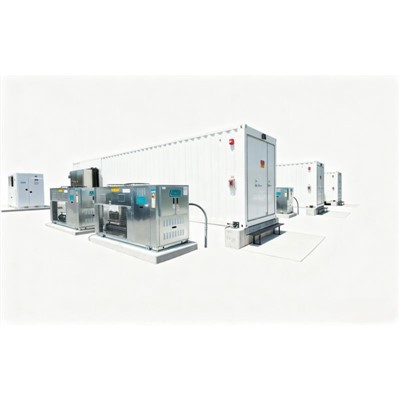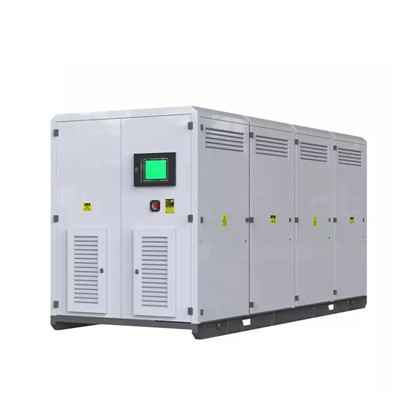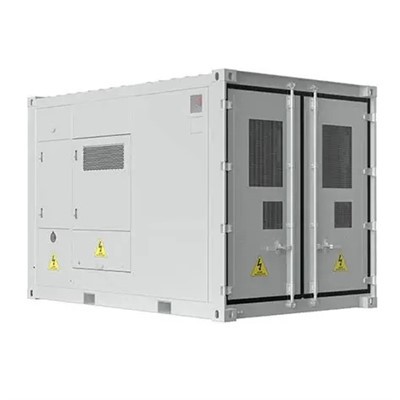
Product Overview
The 1000V High Voltage Battery System is engineered for commercial and industrial energy storage projects that require a higher DC platform, faster system integration, and stronger compatibility with mainstream power conversion equipment. Built around a modular rack architecture, it supports flexible capacity expansion while aligning with the 600–1000V DC operating window commonly used by modern PCS solutions. This makes it a practical choice for retrofits where system designers want to add storage without replacing existing high-voltage infrastructure.
Each battery rack combines high-energy LFP modules, a layered battery management system, and standardized high-voltage interfaces to simplify deployment across different project scales. Whether the application is peak shaving, PV self-consumption, backup power, or microgrid stabilization, the platform is designed to deliver efficient charge and discharge performance with reliable voltage matching. The result is a storage system that reduces integration complexity while improving usable energy density at the system level.
Compared with lower-voltage architectures, the 1000V DC platform offers clear advantages in large-format C&I projects, including lower current at the same power level, more efficient cable utilization, and easier adaptation to common industrial PCS configurations. For EPCs, integrators, and facility owners, this means a battery system that is easier to scale, easier to retrofit, and better suited to demanding operating profiles.
Core Applications
- Industrial retrofit energy storage systems for facilities already operating 1000V-class PCS equipment
- Commercial and industrial microgrids requiring modular capacity expansion and high-voltage DC coupling
- PV storage integration projects focused on self-consumption, demand charge reduction, and load shifting
- High-voltage UPS backup systems for critical loads in manufacturing, data, and infrastructure environments
Technical Specifications
|
Parameter |
Specification |
|
Battery Chemistry |
Lithium Iron Phosphate (LFP) |
|
Nominal Voltage Range |
600–1000V DC |
|
Rack Configuration |
12 to 18 modules per rack, configurable by project voltage requirement |
|
Nominal Rack Capacity |
61.4–92.2 kWh per rack |
|
Total System Capacity |
Up to 2.76 MWh with parallel rack expansion |
|
Max Charge Current |
200 A per rack |
|
Max Discharge Current |
200 A per rack |
|
Recommended Continuous Power |
Up to 92 kW per rack depending on DC bus voltage |
|
Cycle Life |
≥ 8000 cycles at 80% DoD, 25°C |
|
BMS Architecture |
Cell-level BMU + rack-level RBMS + system-level master BMS |
|
Ingress Protection |
IP20 for indoor rack configuration; optional IP54 cabinet integration |
|
Cooling Method |
Intelligent forced-air cooling |
|
Communication |
CAN, RS485, Modbus TCP |
|
Operating Temperature |
Charge: 0°C to 50°C; Discharge: -10°C to 50°C |
|
Installation Type |
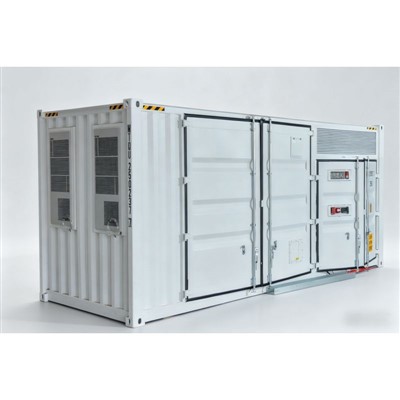
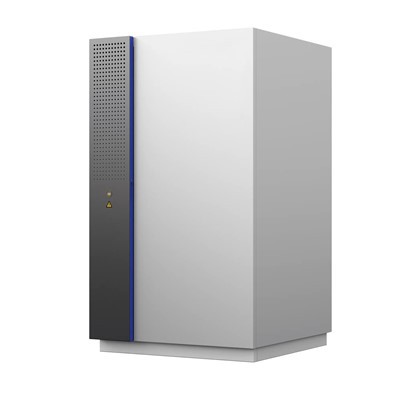
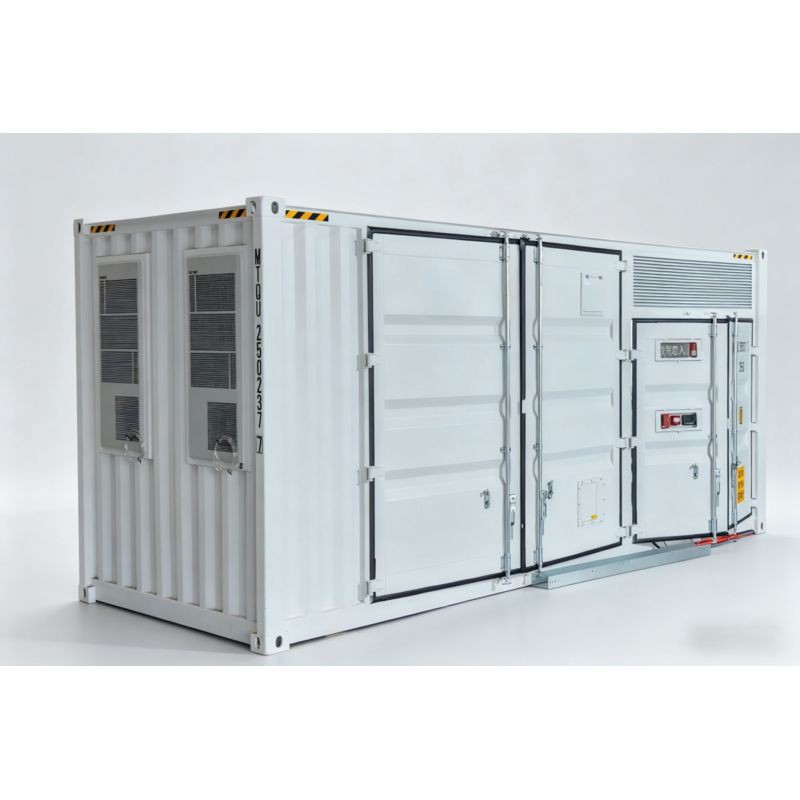
Indoor rack or integrated C&I cabinet deployment |
Application Scenarios
Factory Retrofit with Existing 1000V PCS
Many industrial sites already operate 1000V-class PCS units as part of earlier energy storage or power quality upgrade projects. This battery system allows those facilities to add or replace storage capacity without redesigning the entire DC side of the installation. By matching the voltage window of common PCS platforms, it shortens commissioning time and reduces balance-of-system changes. The modular rack structure also helps plant operators phase capacity expansion around production schedules and available electrical room space.
DC-Coupled Storage for PV Plants
In PV applications, the system can be deployed as a high-voltage storage block to improve solar utilization and support output smoothing. The 1000V DC architecture is well suited to projects that prioritize efficient energy transfer between PV generation, battery storage, and conversion equipment. With scalable rack combinations, developers can size the system for daily shifting, curtailed energy capture, or time-of-use optimization. This makes it particularly effective for commercial solar sites and distributed generation plants seeking higher asset utilization.
High-Voltage UPS for Critical Loads
For critical loads such as automated production lines, control rooms, medical equipment, and data infrastructure, a high-voltage battery platform can provide stable backup support with faster system response and lower current stress. The layered BMS and high-voltage protection design help maintain system continuity during abnormal conditions. Compared with lower-voltage battery strings, the architecture is better aligned with larger UPS and PCS platforms used in industrial environments. It is a strong fit where backup reliability must be combined with compact electrical integration.
C&I Energy Management Cabinet Integration
The system can also serve as the battery core inside commercial and industrial energy management cabinets designed for peak shaving, load shifting, and demand control. Integrators can configure rack quantity according to site load patterns, transformer capacity, and installation footprint. Because the platform is built for compatibility with widely used PCS brands, it simplifies engineering work across repeatable cabinet projects. This is especially valuable for OEM cabinet builders and EPC teams handling multiple retrofit deployments across different customer sites.
Selection Guide
System selection should begin with the PCS DC voltage window. The battery rack configuration must keep the operating voltage within the PCS start-up, MPPT, and full-load working range to ensure stable conversion performance across the full state-of-charge band.
Rack quantity should then be matched to the project energy target, required backup duration, and daily cycling strategy. For retrofit projects, this modular approach allows storage to be added in stages without forcing a one-time oversizing decision.
Installation footprint is equally important in industrial environments where switchgear rooms, containerized enclosures, or cabinet lines may have strict space constraints. A rack-based design gives integrators more freedom to arrange the system around existing infrastructure and maintenance access requirements.
Current limits should be checked carefully at both rack and system level, especially in applications with high power demand or short-duration discharge events. Proper matching between battery current capability, busbar design, cable sizing, and PCS power rating is essential for long-term reliability and thermal stability.
Safety Design
Safety is built into the system through a multi-layer architecture that combines cell monitoring, rack control, and system-level coordination. Each cell is continuously supervised for voltage and temperature deviation, while the rack-level controller manages balancing, protection logic, and operating status in real time. At the top layer, the master BMS coordinates communication with the PCS and external control systems to ensure controlled charging, discharging, and fault response.
The high-voltage circuit includes interlock protection to prevent unsafe operation during maintenance or abnormal connection conditions. Insulation monitoring is integrated to detect leakage or deterioration in the HV loop before it develops into a larger electrical risk. This is especially important in high-voltage retrofit environments where cable routing and mixed equipment ages can increase system complexity.
To strengthen thermal and fire safety, the system can be integrated with cabinet-level fire detection and suppression measures according to project requirements. Combined with cell-level data acquisition and early anomaly identification, this allows maintenance teams to respond before localized issues propagate across the rack. The overall design is intended not only to meet protection requirements on paper, but to support stable long-term operation in real commercial and industrial duty cycles.
Hot Tags: 1000v high voltage battery system, China 1000v high voltage battery system manufacturers, suppliers, factory, Grid Connected Battery Storage, hv energy storage system, hv industrial battery systems, Industrial Battery Cabinet, Medium Voltage Industrial ESS, Peak Shaving Battery System