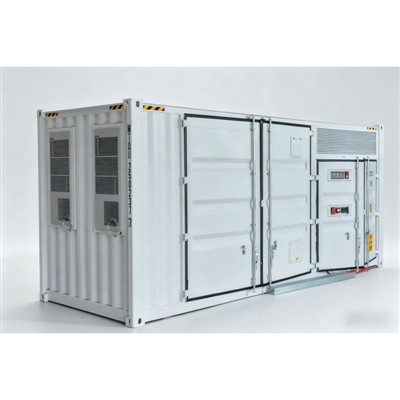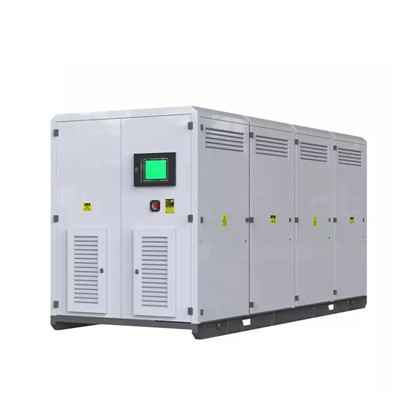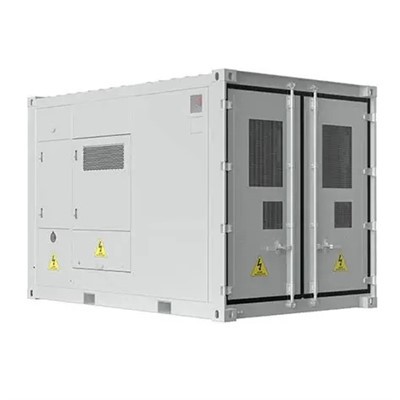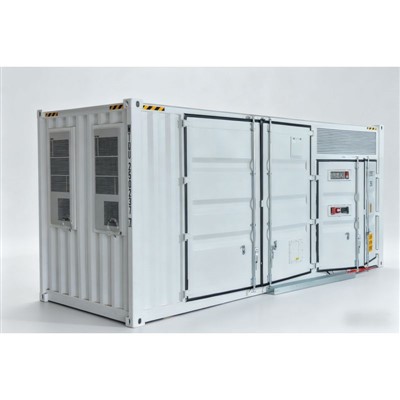
Product Overview
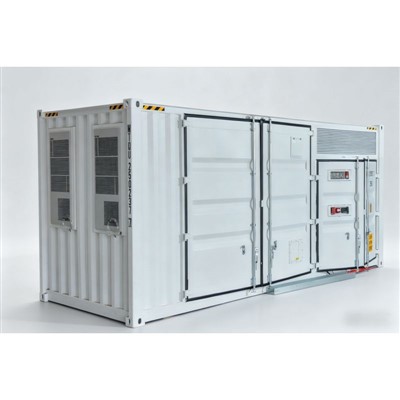
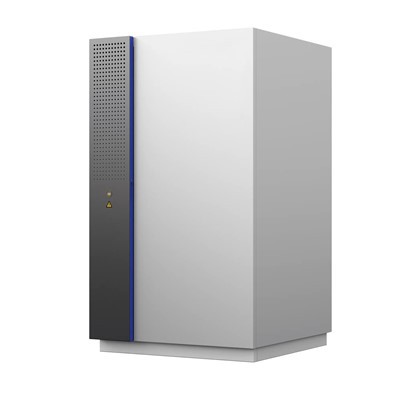
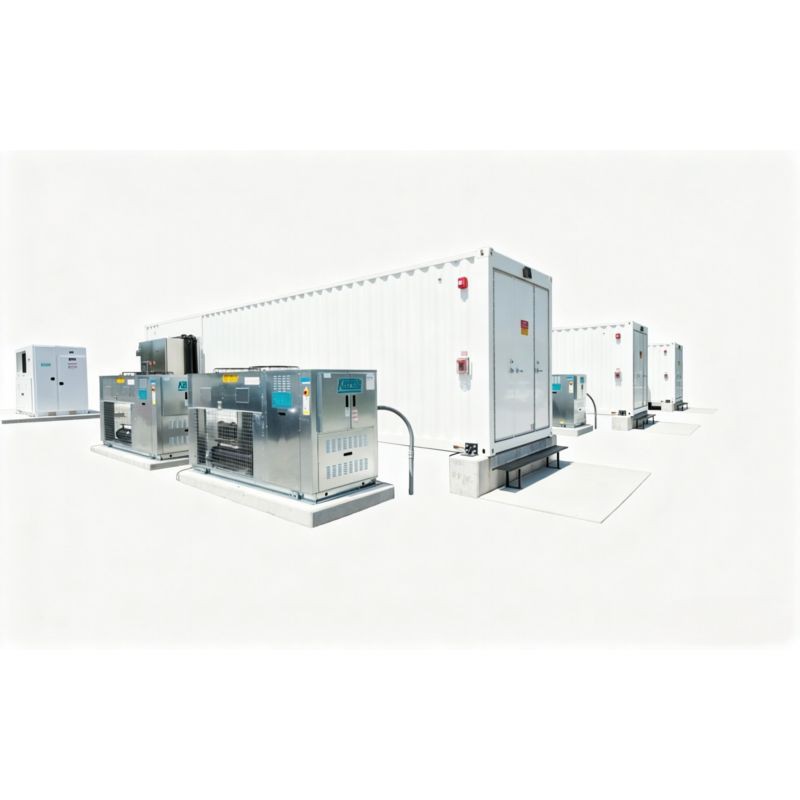
Grid Connected Battery Storage is designed for facilities that interact actively with the utility grid - not just consuming power, but managing how and when energy flows in both directions. Where a basic storage system simply stores and releases energy, this platform adds bidirectional grid interaction, power quality regulation, and real-time frequency/voltage support as native capabilities.
The integrated PCS (Power Conversion System) handles seamless grid synchronization, anti-islanding, and reactive power compensation. Whether you are participating in demand response programs, feeding surplus solar back to the grid, or stabilizing voltage on a weak distribution feeder, this system treats the grid connection as a controllable asset rather than a passive link.
Technical Specifications
|
Parameter |
Specification |
|
Battery Chemistry |
LFP (LiFePO₄) |
|
System Capacity |
100 kWh-5 MWh (modular stacking) |
|
PCS Rated Power |
50 kW-2,500 kW |
|
AC Output Voltage |
380V/400V/480V |
|
Grid Frequency Support |
50 Hz/60 Hz, droop & virtual inertia modes |
|
Reactive Power Range |
±0.9 leading/lagging, 4-quadrant operation |
|
Power Factor |
Adjustable from 0.8 leading to 0.8 lagging |
|
Round-Trip Efficiency |
≥ 93% |
|
THD (Current) |
< 3% at rated power |
|
Anti-Islanding |
Compliant with IEEE 1547/EN 50549 |
|
Grid Fault Ride-Through |
LVRT/HVRT per local grid code |
|
Communication |
Modbus TCP/RTU, IEC 61850, DNP3, OCPP |
|
Protection Rating |
IP55 (outdoor) / IP20 (indoor) |
|
Cycle Life |
≥ 6,000 cycles @ 90% DoD |
|
Operating Temperature |
-20 °C to +55 °C |
|
Certifications |
IEC 62619, IEC 62477, UL 1741 SA, CE, G99 |
|
Design Life |
15 years |
Core Functions
Bidirectional Power Flow
The 4-quadrant PCS enables both import and export of active and reactive power. The system can absorb excess generation, inject stored energy during high-price windows, or provide reactive support.
Power Quality Regulation
Voltage sags, swells, and harmonic distortion are corrected in real time. The system injects or absorbs reactive power within milliseconds, maintaining voltage within ±2% of nominal at the point of common coupling (PCC). Current THD stays below 3%, meeting the strictest utility interconnection requirements.
Frequency Response & Ancillary Services
Configurable droop curves and virtual inertia emulation allow the system to participate in primary frequency response markets. Response time from idle to full power is under 200 ms, fast enough for most ancillary service programs worldwide.
Demand Response Participation
The EMS accepts external dispatch signals via OpenADR 2.0b, Modbus, or proprietary utility protocols. When the grid operator calls for load reduction, the system discharges automatically, earning demand response revenue while protecting your facility from curtailment.
Typical Application Scenarios
Industrial Park with Rooftop Solar and Grid Export
A 50,000 m² industrial park generates 2.5 MWp from rooftop PV but faces grid export limits of 500 kW imposed by the local distribution network operator. A 2 MWh grid-connected storage system absorbs excess solar during midday, then exports it during evening peak hours when feed-in tariffs are highest. The PCS manages ramp-rate limits automatically, ensuring export never exceeds the permitted threshold. Annual revenue from optimized export timing increased by 22% compared to direct curtailment.
Data Center on a Weak Distribution Feeder
A 5 MW data center connected to a rural 33 kV feeder experiences voltage fluctuations of ±6% during peak agricultural load seasons. A 1 MWh / 500 kW grid-connected system provides continuous voltage regulation at the PCC, injecting reactive power during sags and absorbing during swells. The data center avoided a $2.3M dedicated feeder upgrade while maintaining Tier III uptime requirements.
Commercial Facility Participating in Frequency Regulation Market
A logistics hub in a deregulated electricity market enrolled its 500 kWh grid-connected system in the regional frequency regulation market. The system responds to AGC (Automatic Generation Control) signals every 4 seconds, providing symmetric regulation capacity. The facility earns $3,800/month in ancillary service payments, a revenue stream that did not exist before storage installation, effectively subsidizing the system's capital cost.
Utility-Scale Solar Farm with Grid Code Compliance
A 20 MWp solar farm in the Middle East was required to provide LVRT (Low Voltage Ride-Through) and reactive power support as conditions of its grid connection agreement. Rather than oversizing the inverter fleet, the developer added a 5 MWh grid-connected storage system at the point of interconnection. The storage handles fault ride-through, ramp-rate compliance, and nighttime reactive support,functions the solar inverters cannot perform after sunset.
Selection Guide
Choosing the right configuration depends on your grid connection type, local interconnection standards, and intended revenue streams. Key decision points:
|
Grid Scenario |
Recommended Configuration |
Key Feature |
|
Behind-the-meter, no export |
100–500 kWh, single PCS |
Peak shaving PQ correction |
|
Behind-the-meter, grid export |
500 kWh–2 MWh, bidirectional PCS |
TOU arbitrage export optimization |
|
Front-of-meter / utility-scale |
2–5 MWh, multi-PCS parallel |
Frequency regulation LVRT/HVRT |
|
Weak grid / island-prone |
500 kWh–1 MWh, grid-forming PCS |
Voltage support seamless islanding |
Our application engineers can review your single-line diagram and grid connection agreement to recommend the optimal system architecture. Reach out with your project details for a no-cost technical consultation.
FAQ
Hot Tags: grid connected battery storage, China grid connected battery storage manufacturers, suppliers, factory