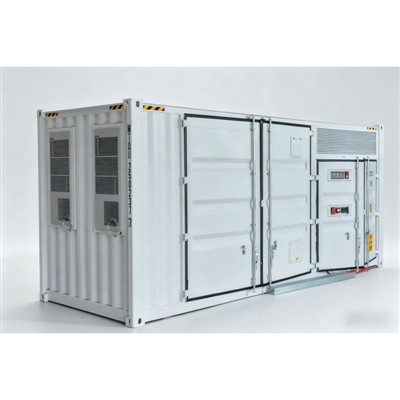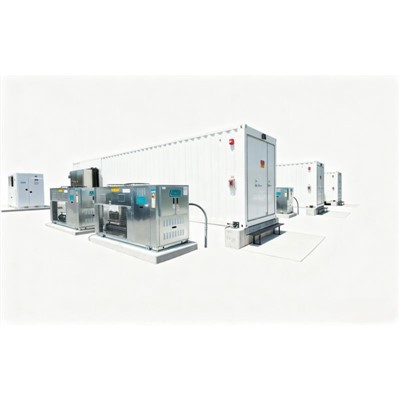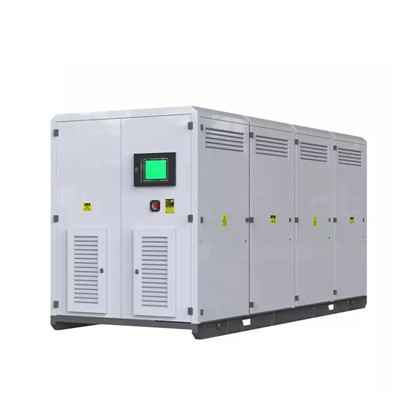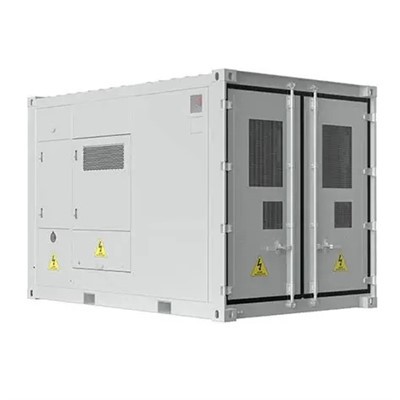
Product Overview
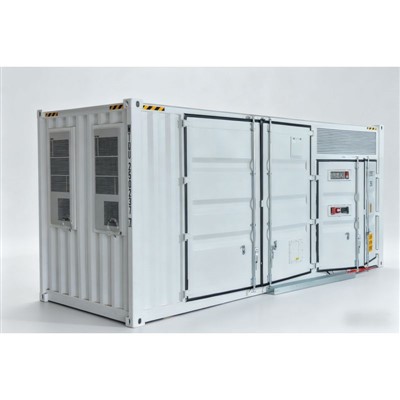
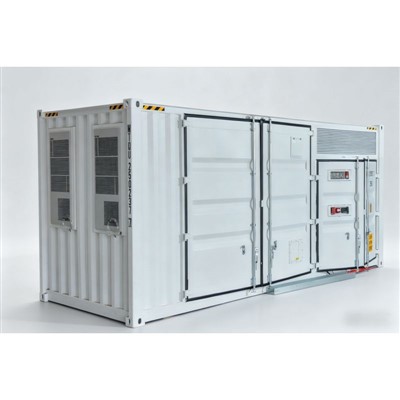
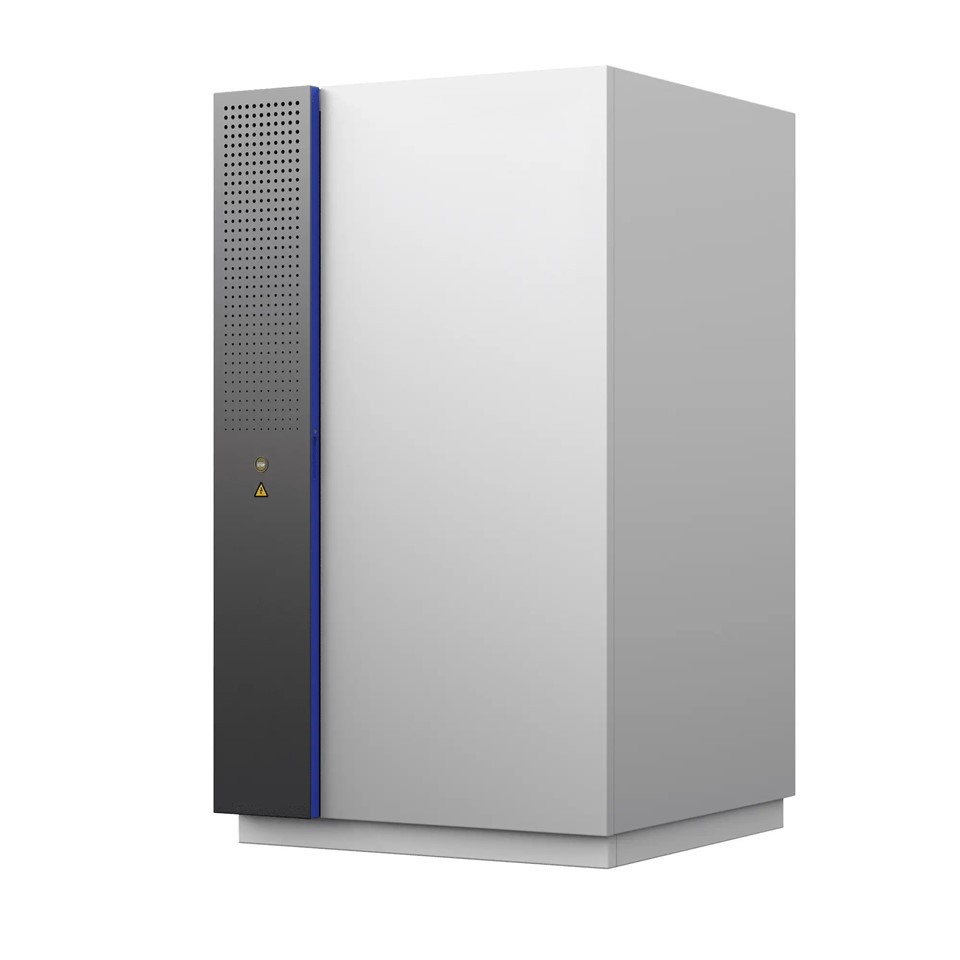
The Liquid Cooled Industrial Battery Cabinet is a high-density storage enclosure engineered around thermal stability, cell consistency, and long-term reliability in demanding industrial environments. Instead of relying on air circulation - which is limited by ambient conditions and uneven airflow - the cabinet uses a closed-loop liquid cooling system to maintain a narrow cell temperature spread, typically within ±2 °C across the entire pack. That translates directly into longer battery life, higher usable capacity, and more stable performance under high-power cycling.
This cabinet is built as a complete outdoor-ready storage block: battery modules, BMS, coolant manifold, heat exchanger, fire suppression, HVAC control, and cabinet protection are integrated at the factory. It serves as the foundational building block for modular C&I and utility-scale storage systems where cabinet design quality is just as important as battery chemistry.
Technical Specifications
|
Parameter |
Specification |
|
Battery Chemistry |
LFP (LiFePO₄) |
|
Usable Energy per Cabinet |
215 kWh/261 kWh/372 kWh |
|
Nominal DC Voltage |
768V/1,331V depending on configuration |
|
Cooling Method |
Closed-loop liquid cooling with plate heat exchanger |
|
Cell Temperature Uniformity |
≤ ±2 °C across pack |
|
Operating Temperature |
-30 °C to +55 °C |
|
Recommended Ambient Temperature |
-20 °C to +45 °C for optimal efficiency |
|
Ingress Protection |
IP55/IP65 |
|
Corrosion Protection |
C4/C5 anti-corrosion coating for coastal/industrial environments |
|
Fire Protection |
Aerosol or Novec-type clean agent, optional water mist linkage |
|
Battery Cycle Life |
≥ 6,000 cycles @ 90% DoD |
|
Noise Level |
< 65dB @ 1 m |
|
BMS |
Cell-level monitoring, active balancing, fault localization |
|
Communication |
CAN, RS485, Modbus TCP, dry contact alarms |
|
Cabinet Material |
Galvanized steel with powder coating |
|
Dimensions (261 kWh reference) |
1,400*1,300*2,300 mm |
|
Weight (261 kWh reference) |
≈ 3,000 kg |
|
Certifications |
IEC 62619, UL 9540A, UN 38.3, CE |
Why Liquid Cooling
Battery cells age faster when exposed to high temperature and, just as importantly, when exposed to uneven temperature. Air-cooled cabinets often show a 6–10°C difference between cells near the air inlet and those farther away, especially in hot climates or high-power duty cycles. That forces the BMS to limit performance based on the hottest cells, leaving usable energy and power on the table.
Liquid cooling solves that by removing heat directly at the module level. The result is tighter thermal control, better consistency between cells, and more predictable performance year-round. It also allows higher energy density because less internal space is wasted on air channels and oversized HVAC airflow paths.
Core Advantages
Higher Energy Density
Compact thermal architecture means more kWh per cabinet footprint. This is particularly valuable where land or equipment room space is expensive.
Better Battery Longevity
Lower cell temperature spread reduces differential aging. Cabinets keep performance more uniform over time, which extends the useful life of the full pack rather than just its best-performing modules.
Stable High-Power Cycling
Liquid cooling supports sustained charge/discharge at higher C-rates than most air-cooled cabinets, making it ideal for fast-cycling applications such as frequency regulation, high-turnover TOU arbitrage, and dynamic industrial loads.
Outdoor Reliability
Closed-loop coolant circuits are less affected by dust, humidity, salt spray, and high ambient temperatures than open-air cooling systems. This makes the cabinet a strong choice for deserts, coastal sites, and heavy industrial yards.
Typical Application Scenarios
Hot-Climate Manufacturing Plant
A metal processing plant in the Gulf region operates in summer ambient temperatures above 45 °C. Its original air-cooled battery system suffered from frequent thermal derating, limiting discharge power during the exact afternoon hours when electricity prices peaked. The liquid cooled cabinet maintained full power delivery throughout the hot season, improving usable daily discharge by 18% and stabilizing cabinet internal temperature despite extreme outdoor conditions.
Coastal Port Facility with High Corrosion Exposure
A port operator installed storage near a container yard exposed to salt fog, humidity, and wind-driven dust. The liquid cooled cabinet was supplied with C5 anti-corrosion coating, sealed cable glands, and IP65 enclosure upgrade. Unlike conventional air-cooled enclosures that draw salt-laden air through the cabinet, the sealed liquid cooled design isolates the battery chamber from the external environment, significantly reducing corrosion risk and cleaning requirements.
Fast-Cycling Frequency Regulation Project
A 10 MW battery project participating in a frequency regulation market cycles multiple times per day, with rapid charge-discharge reversals. Thermal stability is critical because repeated high-power cycling can create hot spots in air-cooled packs. The liquid cooled cabinets keep module temperatures tightly aligned, supporting continuous response without thermal throttling and maintaining round-trip efficiency over long daily duty cycles.
Space-Constrained Commercial Campus
A premium office campus in an urban business district needed 1 MWh of storage for peak shaving and backup but had only a narrow service yard available. By using high-density liquid cooled cabinets rather than lower-density air-cooled alternatives, the entire system fit in 30% less footprint. The cleaner cabinet design also reduced equipment noise, an important factor for proximity to occupied office space.
Selection Guide
Liquid cooling is generally the better option when one or more of the following conditions apply:
• Ambient temperature is consistently high or highly variable
• The project cycles frequently or at high power
• Space is limited and higher cabinet energy density is valuable
• The site is coastal, dusty, or corrosive
• Long-term lifecycle cost matters more than minimum upfront capex
|
Project Condition |
Recommended Cabinet Type |
Reason |
|
Mild climate, low cycling |
Air or liquid cooled |
Either can work |
|
Hot climate, daily cycling |
Liquid cooled |
Avoid thermal derating |
|
High-power/high-throughput use |
Liquid cooled |
Better thermal control and cycle stability |
|
Limited site footprint |
Liquid cooled |
Higher energy density per cabinet |
|
Harsh outdoor/coastal environment |
Liquid cooled |
More sealed and robust enclosure design |
Installation & Maintenance
The cabinet is delivered pre-filled, pressure-tested, and factory commissioned. On site, installation typically requires only placement, DC/AC cable connection (depending on system architecture), grounding, and communication link setup. The cooling system uses industrial-grade coolant with service intervals aligned to routine electrical inspections. Maintenance points , pump, filter, expansion tank, and heat exchange,are front-accessible for simplified service in narrow equipment corridors.
Transport & Delivery
Each cabinet is shipped as a fully assembled unit with internal module bracing and vibration isolation for road and sea transport. Lifting points are integrated into the top frame for crane handling, and forklift channels are provided for ground-level movement. Cabinets can be delivered as single units or pre-configured blocks ready for row installation in larger storage yards.
Hot Tags: liquid cooled industrial battery cabinet, China liquid cooled industrial battery cabinet manufacturers, suppliers, factory