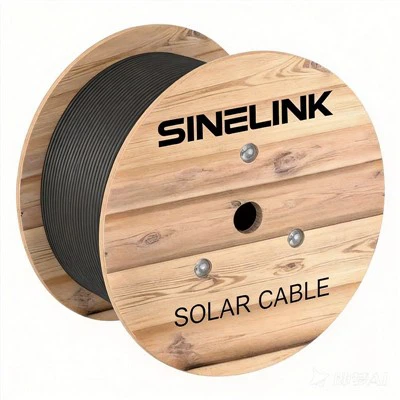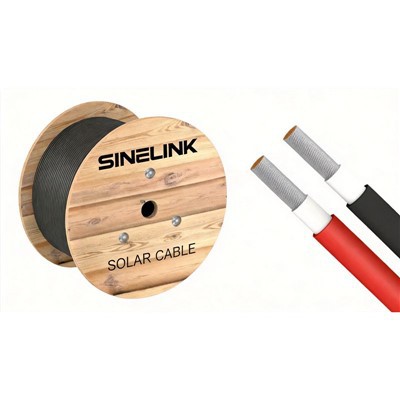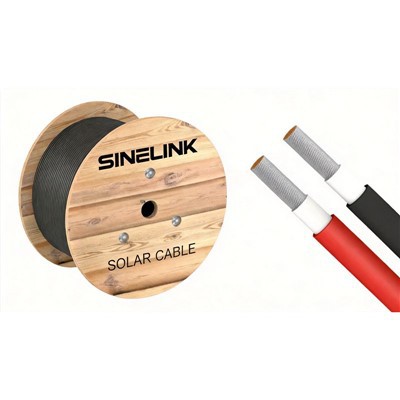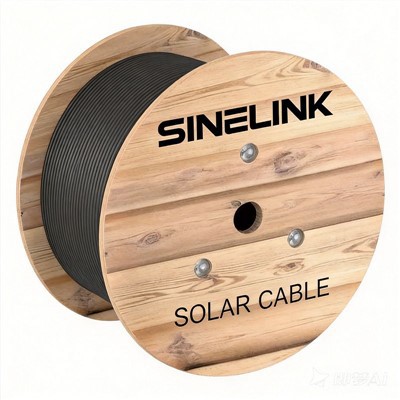
Product Overview
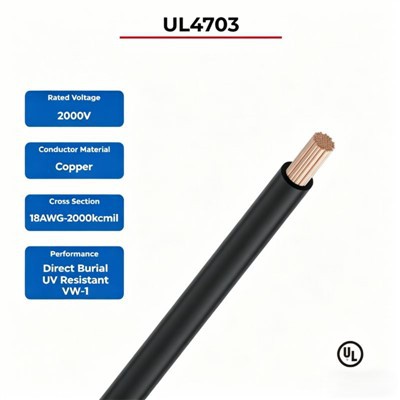
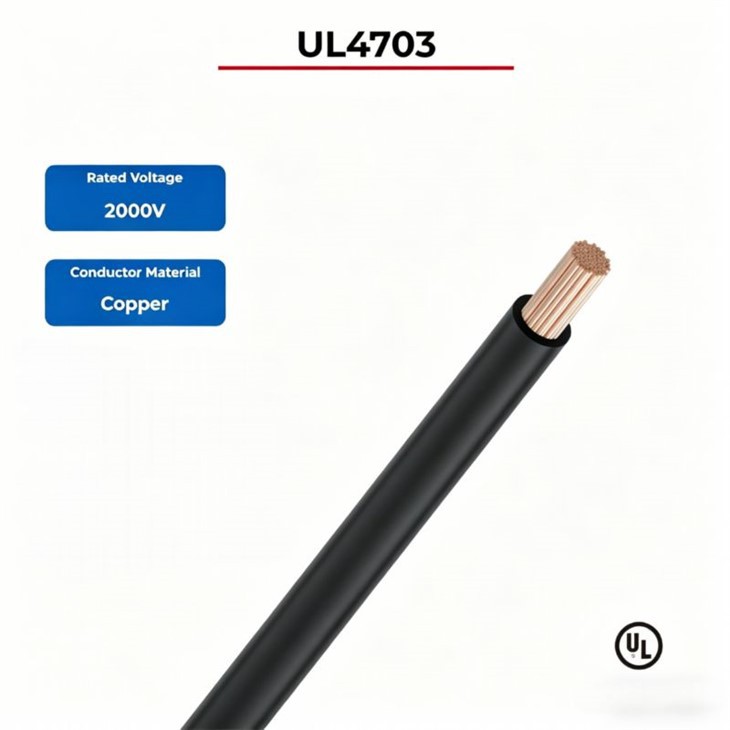
2000V PV Wire is engineered for the next generation of high-voltage photovoltaic system architecture. As the solar industry moves toward 1500V DC and beyond, the insulation system of the wire must keep pace. Standard 600V or 1000V PV wire cannot be used in systems designed above its rated voltage, and with utility-scale projects increasingly adopting 1500V string design, 2000V-rated wire provides both the required insulation margin and the headroom for future system evolution. This is not simply a thicker version of standard PV wire. The insulation compound, wall thickness, and dielectric performance are specifically formulated to withstand continuous operation at 2000V DC.
Specifications
|
Parameter |
Specification |
|
Voltage Rating |
2000V DC |
|
Conductor |
Stranded tinned copper |
|
Available Gauges |
14 AWG through 4/0 AWG |
|
Insulation |
Cross-linked polyethylene, enhanced wall thickness |
|
Temperature Rating |
90°C wet, 150°C dry |
|
Sunlight Resistance |
Sunlight resistant |
|
Jacket |
Single-layer XLPE insulation |
|
Listing |
UL 4703 (2000V rated) |
|
NEC Use |
PV source circuits, PV output circuits in systems above 1000V DC |
|
Color |
Black, red, or custom |
Why 2000V Rating Matters
The shift from 1000V to 1500V DC string design is one of the most significant trends in utility-scale solar. Longer strings mean fewer combiners, less copper, and lower balance-of-system cost. But this shift also means the wire must be rated for the higher voltage, and NEC requires that the cable voltage rating meet or exceed the maximum system voltage, including the cold-temperature open-circuit correction factor.
In practice, a 1500V DC system can produce open-circuit voltages approaching 1600–1700V under cold conditions. A 2000V-rated wire provides comfortable margin above this level, ensuring code compliance without requiring special engineering justification. It also positions the installation for potential future increases in system voltage as inverter and module technology continues to evolve.
Core Uses
1500V DC String Wiring
The primary application. In utility-scale and large commercial systems designed at 1500V DC, every conductor in the PV source circuit must carry a 2000V rating. This includes string wire, home run conductors, and any extension leads within the high-voltage DC section of the system.
High-Voltage Combiner and Feeder Circuits
Combiner outputs and DC feeder runs in 1500V systems also require 2000V-rated wire. The voltage rating applies to the entire DC circuit path, not just the string-level conductors.
Future-Ready Infrastructure
Some project developers specify 2000V wire even in current 1000V systems to avoid rewiring if the site is later upgraded to 1500V architecture. This forward-looking approach adds minimal cost at installation time and can save significant expense if a voltage upgrade occurs during the system lifetime.
Application Scenarios
Utility-Scale Solar Farms
Large solar farms operating at 1500V DC represent the primary market for 2000V PV Wire. These projects use longer strings with more modules in series, generating higher open-circuit voltage that demands the enhanced insulation rating. Every string conductor, home run, and combiner output in the DC section uses 2000V-rated wire to meet NEC requirements.
Large Commercial Systems with 1500V Inverters
As 1500V string inverters become available in smaller form factors, large commercial rooftop and carport systems are beginning to adopt high-voltage DC architecture. 2000V PV Wire enables these installations to capture the BOS cost savings of 1500V design while maintaining full code compliance.
Solar Plus Storage with High-Voltage DC Bus
Some advanced storage architectures use high-voltage DC coupling between the PV array and battery system. When the DC bus voltage exceeds 1000V, all conductors in the high-voltage section require 2000V-rated wire to meet safety and code requirements.
Selection Guide
2000V PV Wire is required in any PV system where the maximum system voltage exceeds 1000V DC. This includes all 1500V DC string designs after applying the NEC cold-temperature voltage correction factor.
For systems operating at 1000V DC or below, standard 1000V-rated PV wire is sufficient. However, specifying 2000V wire in a 1000V system provides future upgrade flexibility at minimal additional cost.
Voltage Rating Comparison
|
Rating |
Typical System Voltage |
Common Application |
|
600V |
Up to 600V DC |
Legacy residential systems, small off-grid |
|
1000V |
Up to 1000V DC |
Standard residential and commercial PV |
|
2000V |
Up to 2000V DC |
Utility-scale, large commercial, future-ready projects |
Technical Support
We provide wire gauge selection assistance based on system voltage, string configuration, NEC ampacity requirements, and voltage drop calculations. Documentation support includes datasheets, UL listing verification, and project-specific compliance materials for permitting and inspection.
Hot Tags: 2000v pv wire, China 2000v pv wire manufacturers, suppliers, factory