
Product Overview
10 AWG PV Wire is the standard conductor size for residential and light commercial solar installations across North America. Listed under UL 4703, it meets the requirements of the National Electrical Code for photovoltaic source and output circuits. With a copper conductor rated for 600V, 1000V, or 2000V DC depending on configuration, it handles the string-level current of most residential PV systems with comfortable margin.
For solar installers working in the U.S. and Canadian markets, 10 AWG is the cable they reach for most often. It is the default string wire for the majority of residential permit applications, and inspectors are thoroughly familiar with its specifications and ampacity ratings.
Specifications
|
Parameter |
Specification |
|
Wire Gauge |
10 AWG |
|
Conductor |
Stranded tinned copper |
|
Voltage Rating |
600V/1000V/ 2000V DC |
|
Insulation |
Cross-linked polyethylene/ |
|
Temperature Rating |
90°C wet, 150°C dry |
|
Sunlight Resistance |
Sunlight resistant / |
|
Ampacity (90°C) |
~40A |
|
Jacket |
Single-layer XLPE insulation |
|
Listing |
UL 4703 |
|
NEC Use |
Photovoltaic source circuits, output circuits |
|
Color |
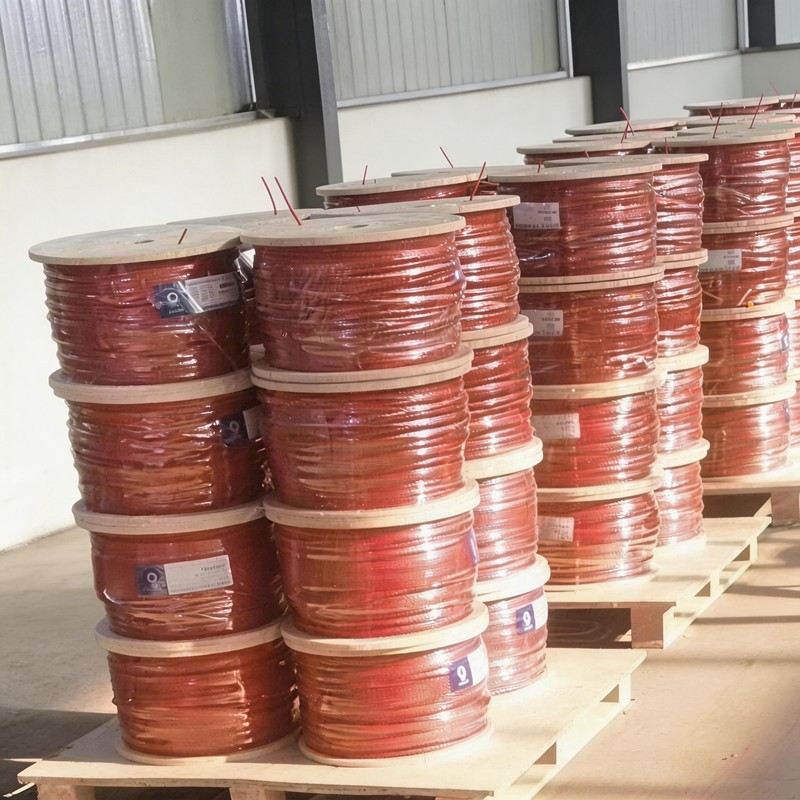
Black, red, or custom |
Core Uses
10 AWG PV Wire covers the bread-and-butter wiring needs of residential solar. It connects individual panels within a string, extends module leads to the rooftop junction box, and runs from the array to the rapid shutdown device or combiner. Its ampacity comfortably handles the output of standard residential modules ,typically 10–15A per string , with the safety factor that NEC requires.
Module String Wiring
The primary use. 10 AWG wire connects panels in series within a string and carries the string current to the first DC disconnect or combiner point. It is sized to meet NEC 690.8 ampacity requirements for most residential string configurations without needing conduit fill derating in typical installations.
Rooftop Lead Extensions
When factory-attached module leads are too short to reach the junction box or conduit entry point, 10 AWG PV wire provides the extension. Its flexibility and sunlight-resistant jacket make it well suited for exposed rooftop routing.
Home Run to Inverter or Rapid Shutdown
In many residential systems, 10 AWG wire carries the string output from the rooftop down to the inverter, rapid shutdown equipment, or DC disconnect. For typical residential distances and current levels, it provides adequate ampacity without upsizing.
Application Scenarios
Residential Rooftop Solar (3–12 kW)
This is the core market for 10 AWG PV Wire. A typical residential system uses two to four strings of 8–15 panels each, with string current in the 10–15A range. 10 AWG wire handles this current within NEC ampacity limits and fits standard residential conduit sizes. Most local permitting offices and AHJs are accustomed to seeing 10 AWG on residential PV plans.
Small Commercial Rooftop Systems
For smaller commercial installations such as offices, retail shops, small warehouses , where string current stays within residential-class levels, 10 AWG wire provides the same reliable performance. It is often used for string wiring even in commercial systems that use heavier gauge wire for the DC home run.
Module-Level Power Electronics
In systems using microinverters or DC optimizers, 10 AWG wire connects the module-level device output to the trunk cable or junction box. The per-module current is well within 10 AWG capacity, and the wire flexibility simplifies routing around module frames and racking hardware.
Selection Guide
10 AWG PV Wire is the right choice for most residential string wiring and light commercial PV circuits where string current stays below approximately 30A (after NEC 690.8 correction). It is the default starting point for residential system design in North America.
Step up to 8 AWG when string current is higher, when conduit fill requires a larger conductor, or when the home run distance creates voltage drop concerns. Step down to 12 AWG only when the circuit current is low enough and the AHJ permits it, typically in very small systems or specific module-level wiring applications.
FAQ