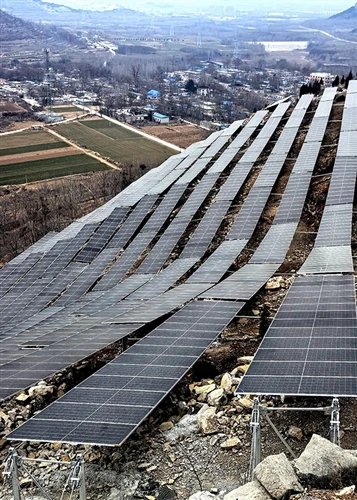
Project Overview
This project integrates high-power liquid-cooled charging equipment with a large-scale battery energy storage system to support fast, reliable and more economical EV charging.
The system includes:
- 6 × 720 kW fully liquid-cooled charging power units
- 36 × 2.4 MW dual-gun liquid-cooled charging terminals
- 6.24 MW / 12.528 MWh battery energy storage system
The project is designed for high-throughput charging scenarios where multiple vehicles may need to charge at the same time. By coordinating charging equipment, battery storage and renewable energy resources, the station can deliver high charging power while reducing pressure on the local grid.
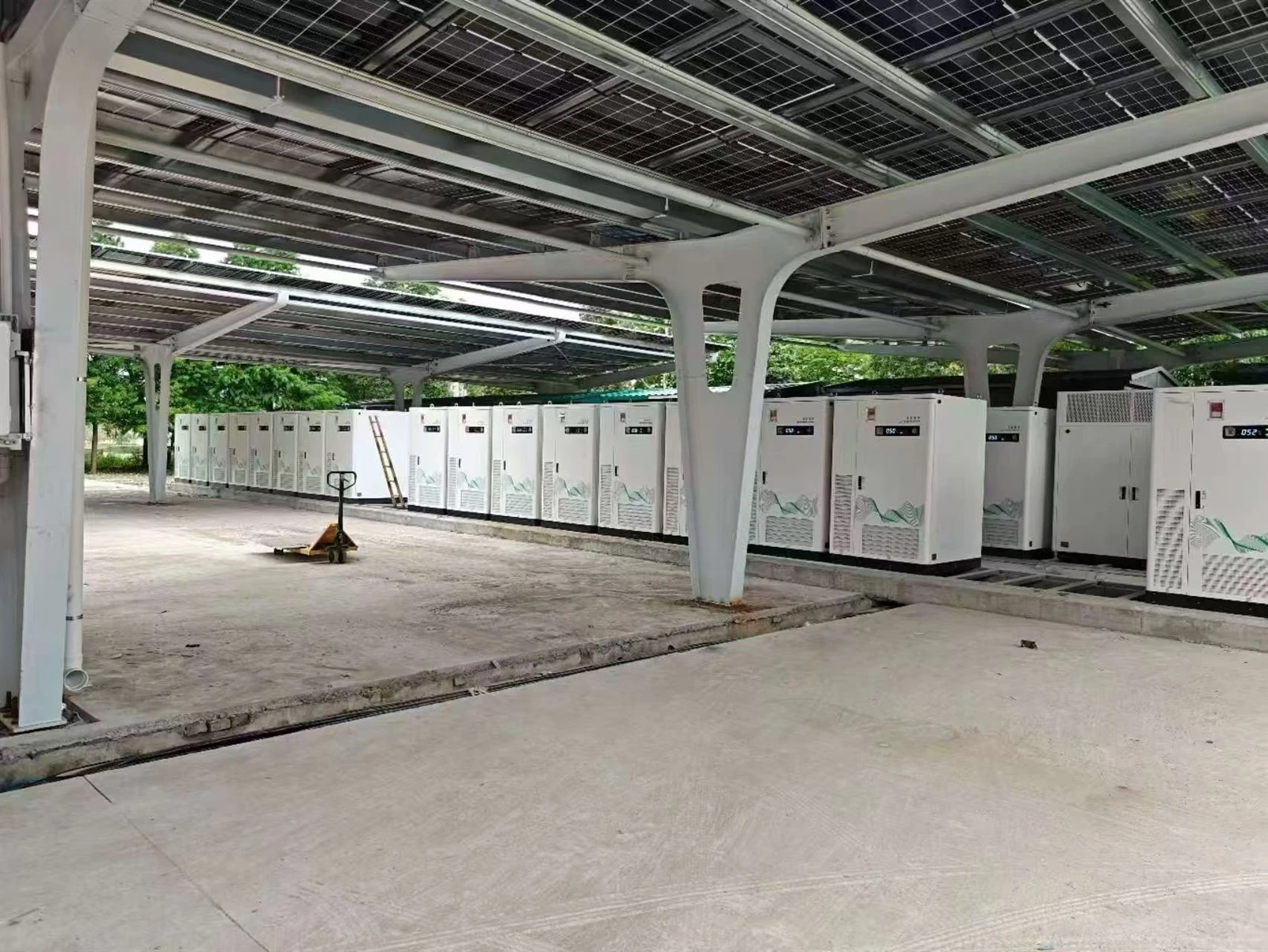
The project includes 6 × 720 kW fully liquid-cooled charging power units, 36 × 2.4 MW dual-gun liquid-cooled charging terminals, and a 6.24 MW / 12.528 MWh battery energy storage system.
For high-power charging sites, the key challenge is not only delivering fast charging, but doing so without creating excessive grid demand peaks. When multiple vehicles charge simultaneously, the station's instantaneous load can rise sharply. A battery energy storage system helps smooth these peaks by supplying part of the charging power during high-demand periods, reducing the site's dependence on short-duration grid capacity.
The Challenge
For a high-power charging station, the main challenge is not simply increasing charging speed. When several vehicles charge simultaneously, the site's power demand can rise sharply within a short period.
Relying entirely on the grid to meet these temporary peaks may require larger transformers, higher contracted capacity and more substantial upgrades to upstream distribution infrastructure. It can also increase demand-related electricity costs and limit future expansion.
The project therefore needed a solution that could support intensive charging demand without allowing short-duration load peaks to determine the size and cost of the entire electrical system.
Our Solution
The battery energy storage system acts as an energy buffer between the charging station and the grid.
During periods of high charging demand, the storage system discharges to provide part of the required power. During lower-demand or lower-cost periods, it can recharge from the grid or absorb available solar generation.
The economic value comes from several coordinated functions:
Peak shaving: Storage can discharge during high-load charging periods, helping reduce peak demand and related grid-capacity costs where applicable.
Energy shifting: Electricity can be stored during lower-cost or lower-demand periods and used later to support charging operations.
Higher renewable utilisation: On-site solar generation can be stored and dispatched when vehicles are charging, rather than being used only at the moment it is produced.
Improved asset utilisation: The integrated energy management system allows charging equipment, storage assets and solar generation to operate as one coordinated system instead of separate assets.
Scalable capacity planning: Battery-buffered charging can help operators support high charging demand while reducing pressure on upstream distribution infrastructure.
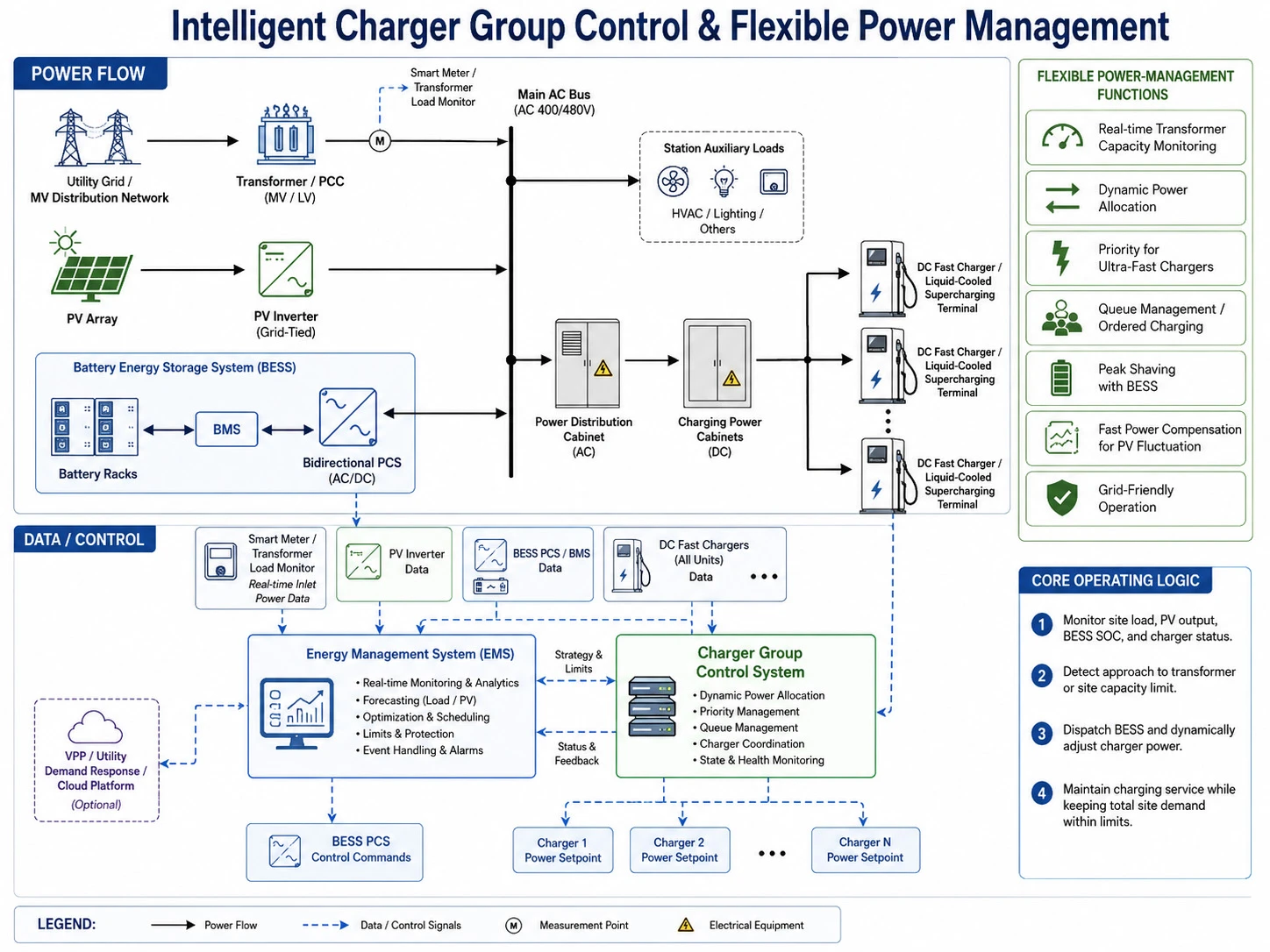
This operating model is increasingly relevant as high-power EV charging grows. Battery storage is widely recognised as a flexibility resource that can shift renewable electricity to periods of higher demand, while smart charging and flexible load management can reduce peak demand on local networks.
Rather than treating solar, storage and charging as separate investments, this project demonstrates a coordinated infrastructure model: renewable generation supports daytime energy supply, storage improves dispatch flexibility, and liquid-cooled charging equipment delivers high-power service when drivers need it.
Designed for high-throughput charging. Engineered for smarter energy economics.