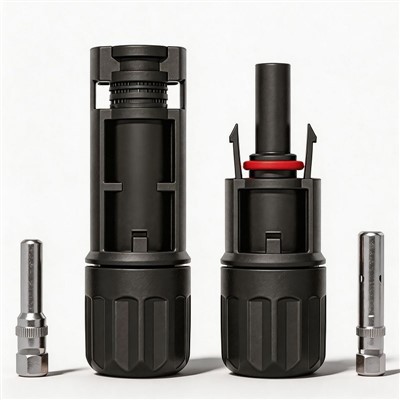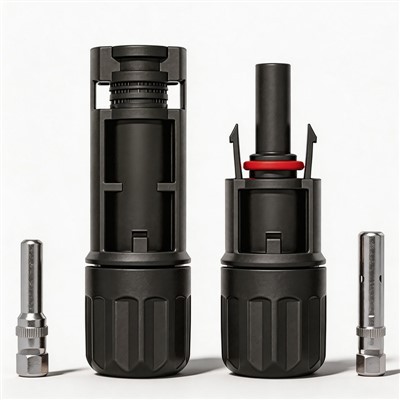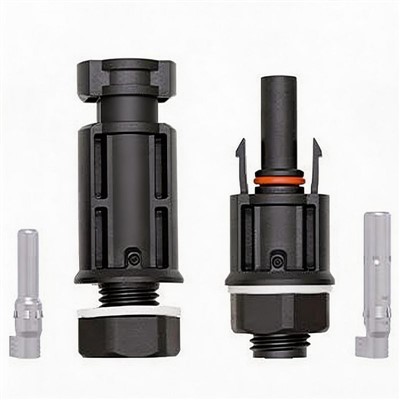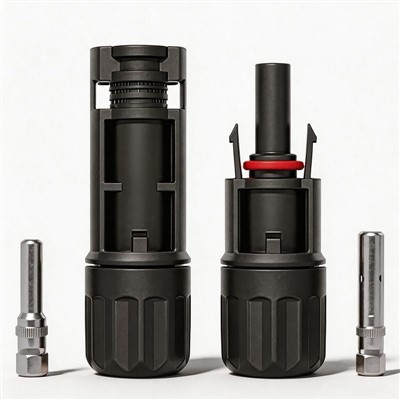
Product Overview
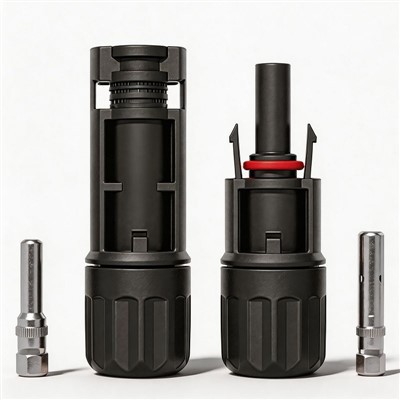
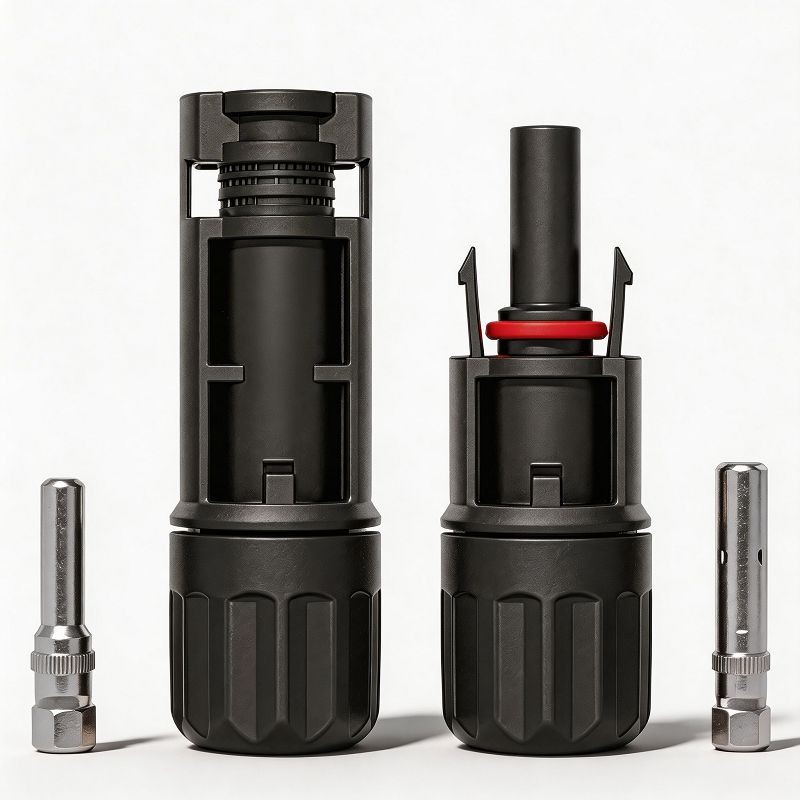
Tinned Copper MC4 Connector uses tin-plated copper contact pins - a deliberate material choice that balances electrical conductivity, corrosion resistance, and cost over the 25–30 year service life of a solar installation. The tin layer protects the copper substrate from oxidation, prevents the formation of high-resistance surface films, and maintains stable contact resistance through years of thermal cycling, humidity exposure, and outdoor weathering.
Copper is an excellent conductor, but bare copper oxidizes. In a sealed connector that sits outdoors for decades, even slow oxidation can gradually increase contact resistance, leading to localized heating and energy loss. The tin plating acts as a sacrificial barrier - it oxidizes far more slowly than copper and its oxide remains conductive, keeping the electrical interface clean and efficient.
Specifications
|
Parameter |
Specification |
|
Connector Type |
MC4 inline solar connector |
|
Rated Voltage |
1000V AC/1500V DC |
|
Rated Current |
30A-50A |
|
Contact Pin Material |
Copper alloy, electrolytic tin plated |
|
Tin Plating Thickness |
≥3 μm |
|
Housing Material |
UV-resistant PPO engineering plastic |
|
Protection Rating |
IP67 (mated condition) |
|
Temperature Range |
-40°C-85°C |
|
Wire Compatibility |
2.5–6 mm²/10–14 AWG |
|
Locking |
Snap-lock, tool-release |
Why Tinned Copper Matters
The contact pin is the most electrically critical part of an MC4 connector. It carries the full circuit current through a small contact area, and any increase in resistance at that interface translates directly into heat generation and power loss. Over 25 years, the cumulative effect of contact degradation can be significant.
Tin plating addresses this by:
- Preventing copper oxide formation on the contact surface
- Maintaining low and stable contact resistance over time
- Resisting corrosion from humidity, salt air, and atmospheric pollutants
- Providing a solderable and crimpable surface that forms reliable terminations
Core Uses
Tinned copper MC4 connectors are suitable for all standard PV applications. They are particularly valuable in environments where long-term contact reliability is a priority:
- General-purpose string wiring in residential and commercial systems
- Installations in humid, coastal, or polluted environments
- Projects with 25 years performance warranties
- Systems where maintenance access is limited and connector replacement is costly
Application Scenarios
Standard Residential and Commercial PV
For the majority of solar installations, tinned copper contacts provide the right balance of performance and cost. They deliver reliable conductivity without the premium of silver plating, making them the practical choice for volume deployment.
Humid and Coastal Environments
In tropical climates, coastal areas, and regions with high ambient humidity, the corrosion protection of tin plating becomes especially important. The tin layer resists the moisture-driven oxidation that can degrade bare copper contacts in these environments.
Long-Warranty and Bankable Projects
Projects backed by long-term performance warranties or institutional financing benefit from the documented reliability of tinned copper contacts. The material choice supports the 25 years service life expectation that financiers and warranty providers require.
Selection Guide
Tinned Copper MC4 Connector is the standard choice for most PV installations. It provides the corrosion resistance and contact stability needed for long-term outdoor service at a cost point that works for volume deployment.
For applications requiring the absolute lowest contact resistance, silver-plated contacts are available as an upgrade option.
Contact Material Comparison
|
Material |
Conductivity |
Corrosion Resistance |
Cost |
|
Bare Copper |
Excellent |
Low |
Lowest |
|
Tinned Copper |
Very Good |
Good |
Moderate |
|
Silver Plated |
Excellent |
Very Good |
Higher |
Hot Tags: tinned copper mc4 connector, China tinned copper mc4 connector manufacturers, suppliers, factory